
This study evaluated the functional properties of fiber-enriched breakfast cereals formulated from millet, malted mungbean and tigernut flours using quadratic response surface models. The data obtained were subjected to regression/statistical analysis as prescribed by the RSM. The regression coefficients were used to test the models. The linear, binary and ternary blends were generated and further highlighted by the response surface plot. The blend ratio ‘31.16g millet, 21.72g mungbean, 47.11g tigernut’ with high desirability of 0.951 was selected after optimization and were validated. The blend will be suitable for production of high gluten-free fiber breakfast cereal and other food products such as bread, cake, sausage and biscuit. The developed regression models will enable food industries maximized/optimized the blending of these flours in production of aforementioned food products so as to increase the product quality. The results showed that blend composition significantly influenced bulk density (BD), water absorption capacity (WAC), oil absorption capacity (OAC), solubility (S), emulsification capacity (EC), and foam stability (FS) (p<0.05), while wettability, viscosity, swelling index, gelatinization temperature, and foam capacity were not significantly affected. Malted mungbean flour played a key role in reducing BD and improving WAC and OAC, indicating its suitability for producing lighter cereals with improved hydration and flavor retention. Significant (p<0.05) interaction effects among the flours, particularly for WAC and EC, highlighted the importance of optimized blend combinations. Foam stability exhibited the highest model predictability (Adj. R² = 0.8596), mainly enhanced by millet inclusion. However, these findings support the development of nutritionally enhanced, consumer-acceptable breakfast cereals with improved reconstitution, texture, and stability, suitable for children, adults, and the elderly, and valuable for commercial cereal formulation and product optimization.
| Published in | World Journal of Food Science and Technology (Volume 10, Issue 1) |
| DOI | 10.11648/j.wjfst.20261001.14 |
| Page(s) | 26-37 |
| Creative Commons |
This is an Open Access article, distributed under the terms of the Creative Commons Attribution 4.0 International License (http://creativecommons.org/licenses/by/4.0/), which permits unrestricted use, distribution and reproduction in any medium or format, provided the original work is properly cited. |
| Copyright |
Copyright © The Author(s), 2026. Published by Science Publishing Group |
Functional Properties, Breakfast Cereals, Response Surface Models
Run | Experimental variable | ||
|---|---|---|---|
Millet flour (x1) | Mungbean flour (x2) | Tiger nut flour (x3) | |
1 | 100 | 0 | 0 |
2 | 0 | 100 | 0 |
3 | 0 | 0 | 100 |
4 | 50 | 50 | 0 |
5 | 50 | 0 | 50 |
6 | 0 | 50 | 50 |
7 | 33.3 | 33.3 | 33.3 |
8 | 66.6 | 16.7 | 16.7 |
9 | 16.7 | 66.6 | 16.7 |
10 | 16.7 | 16.7 | 66.6 |
11 | 100 | 0 | 0 |
12 | 0 | 100 | 0 |
13 | 0 | 0 | 100 |
14 | 50 | 50 | 0 |
Coefficient | BD | WAC | OAC | WE | V | S | SI | GT | EC | FC | FS |
|---|---|---|---|---|---|---|---|---|---|---|---|
Intercept | 0.6357 | 1.4907 | 1.2821 | 71.695 | 32.1607 | 18.472 | 16.48 | 6.9757 | 5.4278 | 6.9285 | 78.105 |
A (p-value) | 0.03 (0.2390) | -0.015 (0.8278) | 0.0187 (0.7626) | -5.5675 (0.4869) | 1.0275 (0.8187) | 0.2537 (0.6960) | 6.0412 (0.3998) | 0.0425 (0.9594) | 0.9862 (0.1097) | 6.3637* (0.0263) | -0.0587 (0.9782) |
B (p-value) | 0.1687* (< 0.0001) | 0.285* (0.0036) | 0.2037* (0.0071) | 12.195 (0.1691) | 0.5425 (0.9036) | 1.1987 (0.0958) | -6.5137 (0.3654) | 0.5 (0.5530) | 1.0987 (0.0807) | -2.3287 (0.3631) | -0.1225 (0.9546) |
C (p-value) | 0.00125 (0.9594) | -0.0875 (0.2293) | -0.055 (0.3838) | 0.6675 (0.9313) | -3.63 (0.4253) | -1.13 (0.1127) | 0.555 (0.9372) | -0.7925 (0.3535) | -1.065 (0.0885) | -1.9075 (0.4532) | -0.8737 (0.6881) |
AB | - | -0.3675* (0.0058) | - | -21.867 (0.1008) | - | -3.31* (0.0071) | - | - | -2.4925* (0.0136) | - | 3.8075 (0.2541) |
AC | - | -0.0775 (0.4366) | - | -12.102 (0.3048) | - | -1.8125 (0.0788) | - | - | -2.05* (0.0310) | - | 20.87* (0.0019) |
BC | - | 0.2625* (0.0268) | - | 7.9325 (0.4838) | - | -0.1275 (0.8891) | - | - | 2.47* (0.0142) | - | 0.1625 (0.9574) |
A² | - | - | - | 6.8487 (0.5837) | - | - | - | - | - | - | -9.585* (0.0401) |
B² | - | - | - | -20.161 (0.1546) | - | - | - | - | - | - | 13.392* (0.0139) |
C² | - | - | - | -18.951 (0.1749) | - | - | - | - | - | - | -1.74 (0.6154) |
Model (p-value) | 0.0003* | 0.0095* | 0.0387* | 0.3003 | 0.8569 | 0.0398* | 0.6536 | 0.7280 | 0.0124* | 0.0972 | 0.0209* |
Lack of Fit | 0.6783 | 0.7429 | 0.6943 | 0.3688 | 0.8351 | 0.2500 | 0.9424 | 0.8698 | 0.4072 | 0.6356 | 0.5421 |
Fit statistics | |||||||||||
Adj R2 | 0.7875 | 0.7450 | 0.4173 | 0.3553 | -0.2080 | 0.6001 | -0.1131 | -0.1478 | 0.7228 | 0.2895 | 0.8596 |
CV (%) | 10.66 | 12.61 | 13.32 | 38.65 | 38.41 | 9.54 | 117.91 | 33.02 | 28.06 | 99.77 | 7.22 |
Standard deviation | 0.0678 | 0.1879 | 0.1708 | 20.58 | 12.35 | 1.76 | 19.43 | 2.30 | 1.52 | 6.91 | 5.72 |
Mean | 0.6357 | 1.49 | 1.28 | 53.26 | 32.16 | 18.47 | 16.48 | 6.98 | 5.43 | 6.93 | 79.29 |
RSM | Respose Surface Methododology |
| [1] | Adejuyitan, J. A. (2011). Tigernut processing: its food uses and health benefits. Am. J. Food Technol. 6, pp. 197-201. |
| [2] | Ahmadu, D. L., Okoye, J. I. and Egbujie, A. E. (2023) Nutrient Composition and Sensory Properties of Breakfast Cereals Produced from Millet Flour Supplemented with Soybean and Date Fruit Flours. Archives of Current Research International, 23(6), pp. 38-52. Available at: |
| [3] | Althwab, S. A., Alhomaid, R. M., Ali, R. F. M., El-Anany, A. M., & Mousa, H. M. (2021). Effect of migratory locust (Locusta migratoria) powder incorporation on nutritional and sensorial properties of wheat flour bread. British Food Journal, 123(11), pp. 3576-3591. Available at: |
| [4] | Awolu, O. O., Omoba, O. S., Olawoye, O. O. and Dairo, M. (2016). Optimization of production and quality evaluation of maize-based snack supplemented with soybean and tiger-nut (Cyperus esculenta) flour. Food Science & Nutrition, 5(1), pp. 3-13. Available at: |
| [5] | Bello, F., Folademi, M. and Iwok, L. (2022). Development of pearl millet flour-based cookies supplemented with mung bean and orange fleshed sweet potato flours. The Annals of the University Dunarea De Jos of Galati Fascicle Vi – Food Technology, 46(1), pp. 155-168. Available at: |
| [6] | Bello, F., Oladeji, B. and Tom, R. (2022) Evaluation of Proximate Composition, Antioxidant and Pasting Properties of Optimized Flour Blends from Pearl Millet, Green Gram and Tigernut Pomace. Food Science and Engineering, pp. 137-146. Available at: |
| [7] | Blount, R. J. S., Ferdaus, Md. J. and Silva, R. C. da (2025) ‘Influence of water content and emulsifiers on the stability and texture of oleogel-emulsions’, Applied Food Research, 5(1), p. 100796. Available at: |
| [8] | Bozdogan, N., Yaprak, A., Tavman, Ş. and Kumcuoğlu, S. (2024). Mung bean flour-added extruded snack production: Evaluation of the pasting properties of flour blends and the physicochemical, morphological, and functional properties of the product. Journal of Food Process Engineering, 47(3). Available at: |
| [9] | Chinma, C. E., Azeez, S., Sulayman, H. T., Alhassan, K., Alozie, S. N., Gbadamosi, H. D. and Adebo, O. A. (2020). Evaluation of fermented African yam bean flour composition and influence of substitution levels on properties of wheat bread. Journal of Food Science, 85(12), pp. 4281-4289. Available at: |
| [10] | Dwivedi, H., Sharma, N. K., Sharma, P., Gurjar, P. S., Jagre, A. K., Sharma, A. K. and Chauriha, S. (2025). Development of Value-Added Functional Foods Using Millets and Pulses: A Review. Journal of Advances in Biology & Biotechnology, 28(10), pp. 1203-1212. Available at: |
| [11] | Eke-Ejiofor, J., Ojimadu, A. E., Wordu, G. O., and Ofoedu, C. E. (2021). Functional Properties of Complementary Food from Millet (Pennisetum glaucum), African Yam Bean (Sphenostylis stenocarpa), and Jackfruit (Artocarpus heterophyllus) Flour Blends: A Comparative Study. Asian Food Science Journal, pp. 45-62. Available at: |
| [12] | Eweama, A. U, Nwosu, J. N., Owuamanam, C. I. and Obeleagu, S. O. (2021). Modelling and optimization of proximate and antinutritional composition of breakfast cereals produced from blends of millet, mungbean and tigernut flour using response surface methodology. International Journal of Research and Scientific Innovation, 08(08), pp. 103-118. Available at: |
| [13] | Gardeli, C., Mela, N., Dedousi, M., Kandyliari, A., Kaparakou, E. H., Diamantopoulou, P., … & Mallouchos, A. (2024). The Influence of Substrate and Strain on Protein Quality of Pleurotus ostreatus. Applied Sciences, 14(10), pp. 4040. Available at: |
| [14] | Gaudin, T. and Aubry, J. M. (2025) ‘Driving the future of cosmetics, fragrances, and foods with COSMO-RS. Part 1-Bibliometric analysis and introductory framework’, Current Opinion in Colloid & Interface Science, 75, p. 101874. Available at: |
| [15] | Han, F., Zhang, S., Zhou, W., Zhang, Y. and Chen, C. (2022). Fabrication and characterization of Pickering high internal phase emulsion stabilized by mung bean flour. Food Science and Technology, Available at: 42. |
| [16] | Jideani. V. A. (2005). Characteristics of Local Pearl Millet (Pennisettum glaucum) Grains. Nigeria Food Journal 23, pp. 193-204. |
| [17] | Miranda, B. d. B., Holanda, G. S., Raposo, A., Maynard, D. D. C., Botelho, R. B. A., Romão, B. and Zandonadi, R. P. (2024). Chickpea aquafaba: a systematic review of the different processes for obtaining and their nutritional and technological characteristics. Journal of Food Science and Technology, 61(8), pp. 1439-1456. Available at: |
| [18] | Mubarak, A. E. (2005). Nutritional Composition and anti-nutritional factors of mungbean seeds (Phaseolus aureus) as affected by some home traditional processors. J. Food Chem. 89: 489 – 495. |
| [19] | Offia-Olua, B. I., Emegharaibe, M. C., Igbokwe, C. C. and Okocha, K. S. (2025). Quality evaluation of breakfast cereals made from blends of millet, orange-fleshed sweet potatoes, wheat and mungbean. Journal of Food Legumes, 38(2), pp. 295-306. Available at: |
| [20] | Okafor, G. I. and Usman, G. O (2013). Production and Evaluation of breakfast cereals from blends of African yam bean (Sphenostylis stenocarpa), Maize (Zea mays) and defatted coconut (Cocus nucifera). Journal of Food Processing and Preservation (in press). |
| [21] | Oke, E., Idowu, M., Adeola, A., Abiola, T. and Adeniji, I. (2020) Evaluation and storage studies of sausage roll produced from wheat-tigernut flour blends. Hrvatski Časopis Za Prehrambenu Tehnologiju Biotehnologiju I Nutricionizam, 14(3-4), pp. 82-90. Available at: |
| [22] | Okoye, J. I., Ahmadu, D. L. and Egbujie, A. E. (2023). Evaluation of proximate composition, functional and pasting properties of millet-based breakfast cereals supplemented with soybean and date fruit flours. International Journal of Scholarly Research in Engineering and Technology, 2(2), pp. 60-70. Available at: |
| [23] | Olatunde, S., Adebowale, A. and Ajiboye, T. (2024). Proximate, Physical and Sensory Characteristics of Enriched Cake Produced from Wheat and Tiger Nut Flour Blends. Journal of Advances in Food Science & Technology, 11(3), pp. 36-41. Available at: |
| [24] | Onwuka, G. I. (2018). Functional properties and Food Toxicants In: Food Analysis and Instrumentation - Theory and Practice. Naphtali Prints Lagos. 2nd edition, Pp. 341 -381. |
| [25] | Onwurafor, E., Ani, J., Uchegbu, N. N., and Ziegler, G. (2020). Quality evaluation of fermented Maize-based Complementary Foods as affected by amylase-rich mungbean malt. Journal of Food Stability, 3(1), pp. 26-37. Available at: |
| [26] | Omoba, O. S., Dada, O. O. and Salawu, S. O. (2015). Antioxidant properties and consumer acceptability of pearl millet – tiger nut biscuits. Nutrition & Food Science, 45(6), pp. 818-828. Available at: |
| [27] | Skylas, D. J., Johnson, J. B., Kalitsis, J., Richard, S., Whiteway, C., Wesley, I. and Quail, K. (2022). Optimised dry processing of protein concentrates from Australian pulses: A comparative study of faba bean, yellow pea and red lentil seed material. Legume Science, 5(1). Available at: |
| [28] | Sun, L., Wu, Q. and Mao, X. (2022). Effects of Oxidation Modification by Malondialdehyde on the Structure and Functional Properties of Walnut Protein. Foods, 11(16), pp. 2432. Available at: |
| [29] | Vanqa, N., Mshayisa, V. V. and Basitere, M. (2022). Proximate, Physicochemical, Techno-Functional and Antioxidant Properties of Three Edible Insect (Gonimbrasia belina, Hermetia illucens and Macrotermes subhylanus) Flours. Foods, 11(7), pp. 976. Available at: |
APA Style
Eweama, A. U., Nwokeke, B. C., Obeleagu, S. O., Ogugua, E. C. (2026). Functional Characterization of Fiber-enriched Breakfast Cereals Blends. World Journal of Food Science and Technology, 10(1), 26-37. https://doi.org/10.11648/j.wjfst.20261001.14
ACS Style
Eweama, A. U.; Nwokeke, B. C.; Obeleagu, S. O.; Ogugua, E. C. Functional Characterization of Fiber-enriched Breakfast Cereals Blends. World J. Food Sci. Technol. 2026, 10(1), 26-37. doi: 10.11648/j.wjfst.20261001.14
@article{10.11648/j.wjfst.20261001.14,
  author = {Ann Uchechi Eweama and Blessing Chibuzo Nwokeke and Solomon Onyeka Obeleagu and Emmanuela Chinonye Ogugua},
  title = {Functional Characterization of Fiber-enriched Breakfast Cereals Blends},
  journal = {World Journal of Food Science and Technology},
  volume = {10},
  number = {1},
  pages = {26-37},
  doi = {10.11648/j.wjfst.20261001.14},
  url = {https://doi.org/10.11648/j.wjfst.20261001.14},
  eprint = {https://article.sciencepublishinggroup.com/pdf/10.11648.j.wjfst.20261001.14},
  abstract = {This study evaluated the functional properties of fiber-enriched breakfast cereals formulated from millet, malted mungbean and tigernut flours using quadratic response surface models. The data obtained were subjected to regression/statistical analysis as prescribed by the RSM. The regression coefficients were used to test the models. The linear, binary and ternary blends were generated and further highlighted by the response surface plot. The blend ratio ‘31.16g millet, 21.72g mungbean, 47.11g tigernut’ with high desirability of 0.951 was selected after optimization and were validated. The blend will be suitable for production of high gluten-free fiber breakfast cereal and other food products such as bread, cake, sausage and biscuit. The developed regression models will enable food industries maximized/optimized the blending of these flours in production of aforementioned food products so as to increase the product quality. The results showed that blend composition significantly influenced bulk density (BD), water absorption capacity (WAC), oil absorption capacity (OAC), solubility (S), emulsification capacity (EC), and foam stability (FS) (p<0.05), while wettability, viscosity, swelling index, gelatinization temperature, and foam capacity were not significantly affected. Malted mungbean flour played a key role in reducing BD and improving WAC and OAC, indicating its suitability for producing lighter cereals with improved hydration and flavor retention. Significant (p<0.05) interaction effects among the flours, particularly for WAC and EC, highlighted the importance of optimized blend combinations. Foam stability exhibited the highest model predictability (Adj. R² = 0.8596), mainly enhanced by millet inclusion. However, these findings support the development of nutritionally enhanced, consumer-acceptable breakfast cereals with improved reconstitution, texture, and stability, suitable for children, adults, and the elderly, and valuable for commercial cereal formulation and product optimization.},
 year = {2026}
}
TY  - JOUR
T1  - Functional Characterization of Fiber-enriched Breakfast Cereals Blends
AU  - Ann Uchechi Eweama
AU  - Blessing Chibuzo Nwokeke
AU  - Solomon Onyeka Obeleagu
AU  - Emmanuela Chinonye Ogugua
Y1  - 2026/03/19
PY  - 2026
N1  - https://doi.org/10.11648/j.wjfst.20261001.14
DO  - 10.11648/j.wjfst.20261001.14
T2  - World Journal of Food Science and Technology
JF  - World Journal of Food Science and Technology
JO  - World Journal of Food Science and Technology
SP  - 26
EP  - 37
PB  - Science Publishing Group
SN  - 2637-6024
UR  - https://doi.org/10.11648/j.wjfst.20261001.14
AB  - This study evaluated the functional properties of fiber-enriched breakfast cereals formulated from millet, malted mungbean and tigernut flours using quadratic response surface models. The data obtained were subjected to regression/statistical analysis as prescribed by the RSM. The regression coefficients were used to test the models. The linear, binary and ternary blends were generated and further highlighted by the response surface plot. The blend ratio ‘31.16g millet, 21.72g mungbean, 47.11g tigernut’ with high desirability of 0.951 was selected after optimization and were validated. The blend will be suitable for production of high gluten-free fiber breakfast cereal and other food products such as bread, cake, sausage and biscuit. The developed regression models will enable food industries maximized/optimized the blending of these flours in production of aforementioned food products so as to increase the product quality. The results showed that blend composition significantly influenced bulk density (BD), water absorption capacity (WAC), oil absorption capacity (OAC), solubility (S), emulsification capacity (EC), and foam stability (FS) (p<0.05), while wettability, viscosity, swelling index, gelatinization temperature, and foam capacity were not significantly affected. Malted mungbean flour played a key role in reducing BD and improving WAC and OAC, indicating its suitability for producing lighter cereals with improved hydration and flavor retention. Significant (p<0.05) interaction effects among the flours, particularly for WAC and EC, highlighted the importance of optimized blend combinations. Foam stability exhibited the highest model predictability (Adj. R² = 0.8596), mainly enhanced by millet inclusion. However, these findings support the development of nutritionally enhanced, consumer-acceptable breakfast cereals with improved reconstitution, texture, and stability, suitable for children, adults, and the elderly, and valuable for commercial cereal formulation and product optimization.
VL  - 10
IS  - 1
ER  -
Department of Food Science and Technology, University of Agriculture and Environmental Sciences, Umuagwo, Nigeria
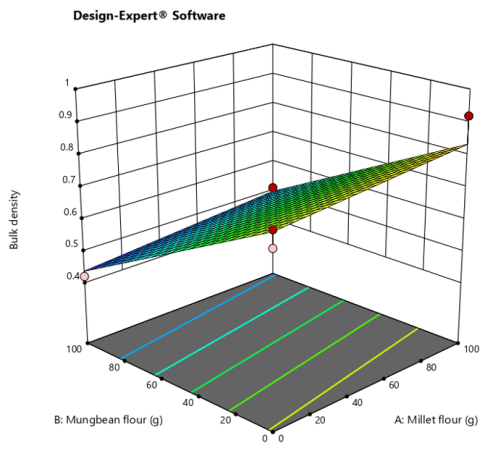
Figure 1. Bulk density of fiber-enriched breakfast cereals.
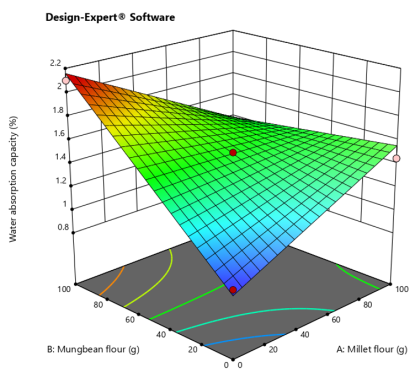
Figure 2. Interaction of millet-mungbean blends of WAC of fiber-enriched breakfast cereals.
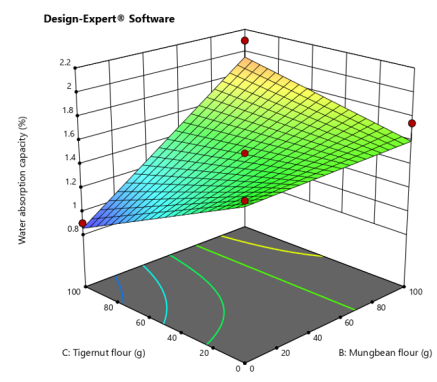
Figure 3. Interaction of mungbean-tigernut blends of WAC of fiber-enriched breakfast cereals.
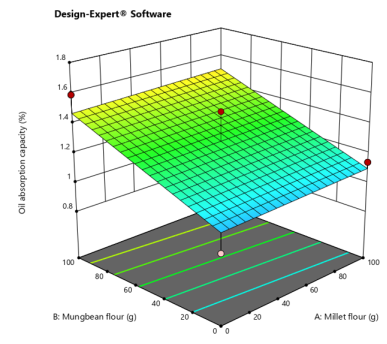
Figure 4. Oil absorption capacity of fiber-enriched breakfast cereals.
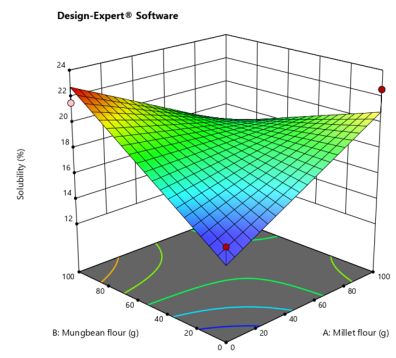
Figure 5. Interaction of millet-mungbean blends of solubility of fiber-enriched breakfast cereals.
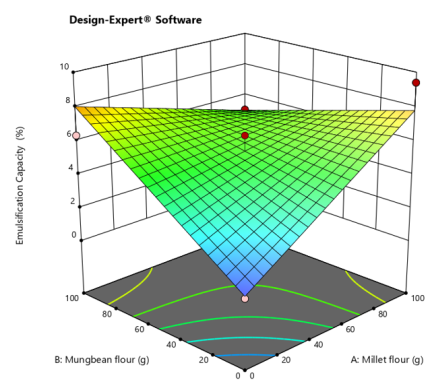
Figure 6. Interaction of millet-mungbean blends of emulsification capacity of fiber-enriched breakfast cereals.
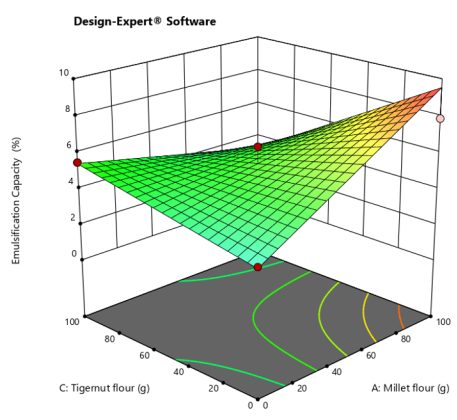
Figure 7. Interaction of millet-tigernut blends of emulsification capacity of fiber-enriched breakfast cereals.
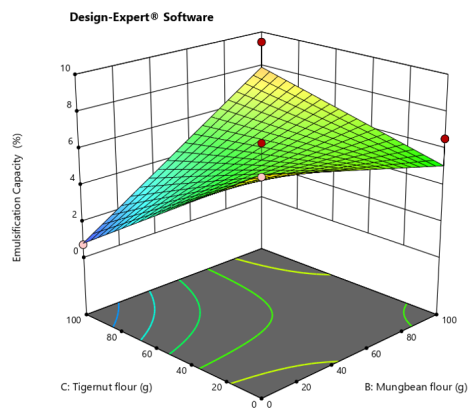
Figure 8. Interaction of mungbean-tigernut blends of emulsification capacity of fiber-enriched breakfast cereals.
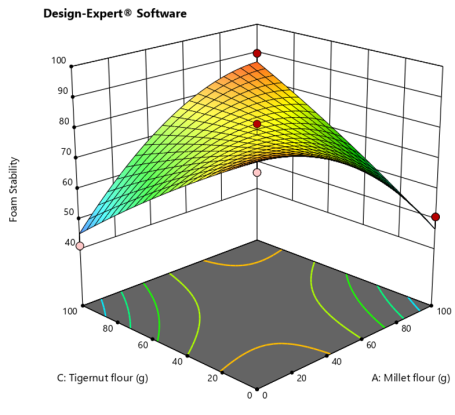
Figure 9. Interaction of millet-tigernut blends of foam stability of fiber-enriched breakfast cereals.

Information



 Share This Article
 Twitter
 Linked In
 Facebook
 Copy
Copy Download