
 ,
Lateef Shola Mustapha,
Abitare Hope,
Chinyere Beatrice Nwosu,
Lawal Badru,
Zuliat Nihinlola Sanni,
Nusirat Tinuke Abdullateef
,
Lateef Shola Mustapha,
Abitare Hope,
Chinyere Beatrice Nwosu,
Lawal Badru,
Zuliat Nihinlola Sanni,
Nusirat Tinuke Abdullateef
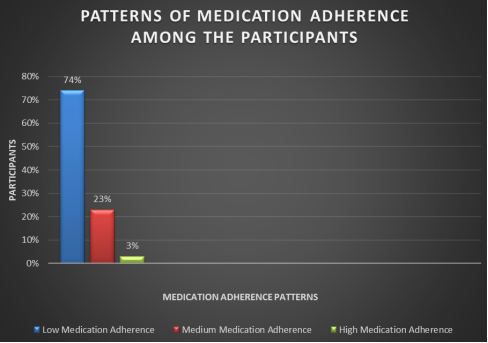
Background: Hypertension is a leading cause of cardiovascular disease globally, but its management is frequently hindered by suboptimal medication adherence, which leads to poorly controlled blood pressure. While poor adherence is a well-documented challenge, a critical research gap exists in North-Western Nigeria regarding how the region's unique socio-cultural factors, such as high levels of informal education and polygamous family structures, influence patients' medication adherence in general outpatient settings. Objective: This study aimed to evaluate the socio-demographic profiles, clinical determinants, and medication adherence patterns among adult hypertensive patients attending a general outpatient clinic in a teaching hospital in North-Western Nigeria to provide context-specific epidemiological data for localized healthcare policies. Method: A hospital-based descriptive cross-sectional study was conducted among 130 adult hypertensive patients at the General Outpatient Clinic of the Federal Teaching Hospital Birnin Kebbi. Participants on antihypertensive medications for at least six months were selected using a systematic random sampling technique. Data were collected using a semi-structured questionnaire for socio-demographics, and the validated 8-item Morisky Medication Adherence Scale was utilized to evaluate adherence patterns. Additionally, blood pressure and Body Mass Index were measured and categorized. Data were analyzed using SPSS version 23, with chi-square tests used to determine statistical associations (p ≤ 0.05). Results: The participants had a mean age of 50.16 ± 11.09 years, and the majority (62.3%) were female. Medication adherence was exceptionally poor; according to the MMAS-8 scale, 74% of participants had low adherence, 23% had medium adherence, and only 3% had high adherence. There were no statistically significant associations between medication adherence patterns and socio-demographic variables. However, there was a statistically significant inverse relationship between the duration of hypertension treatment and medication adherence (p = 0.012). Participants treated for less than one year showed better adherence, while low adherence was exceedingly high among those treated for 1-5 years or longer. Furthermore, a significant majority (67.8%) of participants had uncontrolled blood pressure, and nearly half (43.1%) were obese. Conclusion: Medication adherence among adult hypertensive patients in North-Western Nigeria is alarmingly low, which severely undermines treatment efficacy and cardiovascular outcomes. The significant decline in adherence observed with longer treatment durations suggests pervasive treatment fatigue. To mitigate this, healthcare providers must implement continuous, patient-centered educational interventions and holistic lifestyle management strategies tailored to patients undergoing long-term therapy.
| Published in | Journal of Family Medicine and Health Care (Volume 12, Issue 3) |
| DOI | 10.11648/j.jfmhc.20261203.14 |
| Page(s) | 67-77 |
| Creative Commons |
This is an Open Access article, distributed under the terms of the Creative Commons Attribution 4.0 International License (http://creativecommons.org/licenses/by/4.0/), which permits unrestricted use, distribution and reproduction in any medium or format, provided the original work is properly cited. |
| Copyright |
Copyright © The Author(s), 2026. Published by Science Publishing Group |
Adult, Hypertension, Medication Adherence, Socio-demographic Profiles, Treatment Duration
Socio-demographic variables | Frequency (n = 130) | Percentage (%) |
|---|---|---|
Age group (years) | ||
30-39 | 23 | 17.7 |
40-49 | 35 | 26.9 |
50-59 | 39 | 30.0 |
≥ 60 | 33 | 25.4 |
Sex | ||
Male | 49 | 37.7 |
Female | 81 | 62.3 |
Religion | ||
Islam | 120 | 92.3 |
Christianity | 10 | 7.7 |
Marital status | ||
Married | 104 | 80.0 |
Separated | 3 | 2.3 |
Widowed | 23 | 17.7 |
Type of marriage | ||
Monogamous | 75 | 57.7 |
Polygamous | 55 | 42.3 |
Family type | ||
Extended | 55 | 42.3 |
Nuclear | 75 | 57.7 |
Educational level | ||
No formal education | 16 | 12.3 |
Quranic school only | 47 | 36.2 |
Vocational | 2 | 1.5 |
Primary | 10 | 7.7 |
Secondary | 18 | 13.8 |
Tertiary | 37 | 28.5 |
Occupation | ||
Housewife | 29 | 22.3 |
Self-employed | 64 | 49.2 |
Civil servant | 36 | 27.7 |
Retired Civil servant | 1 | 0.8 |
Average monthly income | ||
≤ 30,000 | 55 | 42.3 |
>30,000 | 75 | 57.7 |
Determinant variables | Frequency (n=130) | Percentage (%) |
|---|---|---|
Hypertension treatment duration (years) | ||
<1 | 29 | 22.3 |
1-5 | 59 | 45.4 |
>5 | 42 | 32.3 |
BP Status | ||
Controlled BP | 42 | 32.3 |
Uncontrolled BP | 88 | 67.8 |
BMI Status | ||
Underweight | 3 | 2.3 |
Healthy weight | 38 | 29.2 |
Overweight | 33 | 25.4 |
Obese | 56 | 43.1 |
Variables | Pattern of Medication Adherence | χ2 | P-value | ||
|---|---|---|---|---|---|
Low adherence N1 (%) | Medium adherence N2 (%) | High adherence N3 (%) | |||
Age | |||||
30-39 | 18 (78.3) | 5 (21.7) | 0 (0.0) | 2.094 | 0.911 |
40-49 | 24 (68.6) | 4 (23.6) | 1 (2.9) | ||
50-59 | 29 (74.4) | 8 (20.5) | 2 (5.1) | ||
≥ 60 | 25 (75.8) | 7 (21.2) | 1 (3.0) | ||
Gender | |||||
Female | 64 (79.0) | 14 (17.3) | 3 (3.7) | 4.176 | 0.124 |
Male | 32 (65.3) | 16 (32.7) | 1 (2.0) | ||
Religion | |||||
Christianity | 8 (80.0) | 2 (20.0) | 0 (0.0) | 0.433 | 0.805 |
Islam | 88 (73.3) | 28 (23.3) | 4 (3.3) | ||
Marital status | |||||
Married | 74 (71.2) | 26 (25.0) | 4 (3.8) | 2.800 | 0.592 |
Separated | 3 (100.0) | 0 (0.0) | 0 (0.0) | ||
Widowed | 19 (82.6) | 4 (17.4) | 0 (0.0) | ||
Type of marriage | |||||
Monogamous | 56 (74.7) | 16 (21.3) | 3 (4.0) | 0.741 | 0.691 |
Polygamous | 40 (72.7) | 14 (25.5) | 1 (1.8) | ||
Family type | |||||
Extended | 40 (72.7) | 14 (25.5) | 1 (1.8) | 0.741 | 0.691 |
Nuclear | 56 (74.7) | 16 (21.3) | 3 (4.0) | ||
Educational Level | |||||
NFE | 13 (81.3) | 3 (18.8) | 0 (0.0) | 6.942 | 0.731 |
Vocational | 1 (50.0) | 1 (50.0) | 0 (0.0) | ||
Quranic | 32 (68.1) | 14 (29.8) | 1 (2.1) | ||
Primary | 8 (80.0) | 1 (10.0) | 1 (10.0) | ||
Secondary | 15 (83.3) | 2 (11.1) | 1 (5.6) | ||
Tertiary | 27 (73.0) | 9 (24.3) | 1 (2.7) | ||
Occupation | |||||
RCS | 1 (100.0) | 0 (0.0) | 0 (0.0) | 2.418 | 0.877 |
Civil servant | 27 (75.0) | 8 (22.2) | 1 (2.8) | ||
Housewife | 27 (72.4) | 6 (20.7) | 2 (6.9) | ||
SE | 47 (73.4) | 16 (25.0) | 1 (1.6) | ||
Monthly income | |||||
≤ 30,000 | 57 (76.0) | 17 (22.7) | 1 (1.3) | 4.662 | 0.793 |
> 30,000 | 39 (70.9) | 13 (23.6) | 3 (5.5) | ||
Clinical Variables | Medication Adherence Patterns | ||||
|---|---|---|---|---|---|
Low Adherence | Medium Adherence | High Adherence | χ2 | P-value | |
N1 (%) | N2 (%) | N3 (%) | |||
Hypertension treatment duration | |||||
< 1year | 14 (48.3) | 13 (44.8) | 2 (6.9) | 12.760 | 0.012 |
1-5 years | 48 (81.4) | 10 (16.9) | 1 (1.7) | ||
>5years | 34 (80.0) | 7 (16.7) | 1 (2.4) | ||
BP status | |||||
Controlled | 27 (64.3) | 14 (33.3) | 1 (2.4) | 3.694 | 0.158 |
Uncontrolled | 69 (78.4) | 16 (18.2) | 3 (3.4) | ||
BMI status | |||||
Underweight | 2 (66.7) | 0 (0.0) | 1 (33.3) | 10.734 | 0.097 |
Normal weight | 27 (73.0) | 9 (24.3) | 1 (2.7) | ||
Overweight | 26 (78.8) | 6 (18.2) | 1 (3.0) | ||
Obese | 40 (71.4) | 15 (26.8) | 1 (1.8) | ||
BP | Blood Pressure |
DBP | Diastolic Blood Pressure |
FTH | Federal Teaching Hospital |
GOPC | General Outpatients Clinic |
MMAS-8 | Morisky Medication Adherence Scale-8 |
SBD | Systolic Blood Pressure |
SPSS IBM 23 | Statistical Package for Social Sciences Version 23 |
| [1] | Ordinioha B. The prevalence of hypertension and its modifiable risk factors among lecturers of a medical school in Port Harcourt, South-South Nigeria: implications for control efforts. Nigerian Journal of Clinical Practice. 2013; 16(1): 1-11. |
| [2] | Chiazor IE, Oparah AC. Assessment of hypertension care in a Nigerian Hospital. Tropical Journal of Pharmaceutical Research. 2012; 11(1): 137-45. |
| [3] | Ugwuja E, Ezenkwa U, Nwibo A, Ogbanshi M, Idoko O, Nnabu R. Prevalence and determinants of hypertension in an agrarian rural community in southeast Nigeria. Annals of medical and health sciences research. 2015; 5(1): 45-9. |
| [4] | Chobanian AV, Bakris GL, Black HR, Cushman WC, Green LA, Izzo Jr JL, et al. The seventh report of the Joint National Committee on Prevention, Detection, Evaluation, and Treatment of high blood pressure: the JNC 7 report. Jama. 2003; 289(19): 2560-71. |
| [5] | Zhou B, Carrillo-Larco RM, Danaei G, Riley LM, Paciorek CJ, Stevens GA, et al. Worldwide trends in hypertension prevalence and progress in treatment and control from 1990 to 2019: a pooled analysis of 1201 population-representative studies with 104 million participants. The Lancet. 2021 Sep 11; 398(10304): 957-80. |
| [6] | Oliveros E, Patel H, Kyung S, Fugar S, Goldberg A, Madan N, et al. Hypertension in older adults: Assessment, management, and challenges. Clinical cardiology. 2020; 43(2): 99-107. |
| [7] | Adisa R, Ilesanmi OA, Fakeye TO. Treatment adherence and blood pressure outcome among hypertensive outpatients in two tertiary hospitals in Sokoto, Northwestern Nigeria. BMC Cardiovascular Disorders. 2018; 18(1): 1-10. |
| [8] | Iloh GU, Ofoedu JN, Njoku PU, Godswill-Uko EU, Amadi AN. Medication adherence and blood pressure control amongst adults with primary hypertension attending a tertiary hospital primary care clinic in Eastern Nigeria. African Journal of Primary Health Care and Family Medicine. 2013; 5(1): 1- 6. |
| [9] | Al-Noumani H, Wu JR, Barksdale D, Sherwood G, Alkhasawneh E, Knafl G. Health beliefs and medication adherence in patients with hypertension: a systematic review of quantitative studies. Patient education and counseling. 2019 Jun 1; 102(6): 1045-56. |
| [10] | Burnier M, Egan BM. Adherence in hypertension: a review of prevalence, risk factors, impact, and management. Circulation research. 2019 Mar 29; 124(7): 1124-40. |
| [11] | Charchar FJ, Prestes PR, Mills C, Ching SM, Neupane D, Marques FZ, et al. Lifestyle management of hypertension: International Society of Hypertension position paper endorsed by the World Hypertension League and European Society of Hypertension. J Hypertens. 2024 Jan 1; 42(1): 23-49. |
| [12] | Abegaz TM, Shehab A, Gebreyohannes EA, Bhagavathula AS, Elnour AA. (2017). Nonadherence to antihypertensive drugs: A systematic review and meta-analysis. Medicine. 2017; 96(4): e5641. |
| [13] | Religioni U, Barrios-Rodríguez R, Requena P, Borowska M, Ostrowski J. Enhancing therapy adherence: impact on clinical outcomes, healthcare costs, and patient quality of life. Medicina. 2025 Jan 17; 61(1): 153. |
| [14] |
Neiman AB. CDC grand rounds: improving medication adherence for chronic disease management—innovations and opportunities. MMWR. Morbidity and Mortality Weekly Report. 2017; 66. Available at:
https://www.cdc.gov/mmwr/volumes/66/wr/mm6645a2.htm (Accessed May 8, 2025). |
| [15] | Zhou X, Zhang X, Gu N, Cai W, Feng J. Barriers and facilitators of medication adherence in hypertension patients: a meta-integration of qualitative research. Journal of Patient Experience. 2024 Mar; 11: 23743735241241176. |
| [16] | Olaniran GO, Akodu BA, Olaniran AA, Bamidele JO, Ogunyemi AO, Idowu OO. Medication adherence and perceived family support Among elderly patients with hypertension attending a specialty clinic in Lagos, Nigeria. Annals of Health Research 2023 Mar 26; 9(1): 30-42. |
| [17] | Shahin W, Kennedy GA, Stupans I. The association between social support and medication adherence in patients with hypertension: A systematic review. Pharmacy Practice (Granada). 2021 Jun; 19(2). |
| [18] | McCarthy CP, Bruno RM, McEvoy JW, Touyz RM. 2024 ESC Guidelines for the management of elevated blood pressure and hypertension: what is new in pharmacotherapy? 2025: 7-9. |
| [19] | Lam WY, Fresco P. Medication adherence measures: an overview. BioMed Research International. 2015; 2015(1): 217047. |
| [20] | Araoye MO. Research methodology with statistics for health and social sciences. Ilorin: Nathadex Publisher. 2003; 115(9): 25-120. |
| [21] |
ResRef. Morisky Medication Adherence Scale-8 (MMAS-8): A Full Guide for Researchers and Clinicians. 2025. Available at:
https://resref.com/morisky-medication-adherence-scale-8-mmas-8-full-guide/ (Accessed on July 8, 2026). |
| [22] | Martínez-Pérez P, Orozco-Beltrán D, Pomares-Gómez F, Hernández-Rizo JL, Borrás-Gallen A, Gil-Guillén VF, et al. Validation and psychometric properties of the 8-item Morisky Medication Adherence Scale (MMAS-8) in type 2 diabetes patients in Spain. Atención Primaria. 2021; 53(2): 101942. |
| [23] | Morisky DE, DiMatteo MR. Improving the measurement of self-reported medication non-adherence: response to authors. Journal of Clinical Epidemiology. 2011; 64(3): 255-7. |
| [24] | Leiva A, Aguillo A, Fajo-Pascaul A, Moreno L, Martín MC, García EM. Efficacy of a brief multifactorial Adherence-based intervention in reducing blood pressure: a randomised clinical trial. Patient preference and adherence. 2014; 8: 1683. |
| [25] | Osamor PE. Social support and management of hypertension in south-west Nigeria: cardiovascular topic. Cardiovascular Journal of Africa. 2015; 26(1): 29-33. |
| [26] | Ojo OS, Malomo SO, Sogunle PT. Blood pressure (BP) control and perceived family support in patients with hypertension seen at a primary care clinic in Western Nigeria. Journal of Family Medicine and Primary Care. 2016; 5(3): 569. |
| [27] | Ekundayo O, Elegbede O, Gabriel-Alayode O, Agboola S, Shabi O, Bello I, et al. Relationship between Perceived Spousal Social Support and Blood Pressure Control among Hypertensive Patients Attending General Outpatient Clinic in Federal Teaching Hospital, Ido-Ekiti, Nigeria. Archives of Clinical Hypertension. 2020; 6(1): 022-8. |
| [28] | Adisa R, Olajide OO, Fakeye TO. Social Support, Treatment Adherence and Outcome among Hypertensive and Type 2 Diabetes Patients in Ambulatory Care Settings in Southwestern Nigeria. Ghana Medical Journal. 2017; 51(2): 64-77. |
| [29] | Ekwunife, OI, Udeogaranya, PO, Nwatu, IL. Prevalence, patterns, and predictors of complementary and alternative medicine use among hypertensive patients in South-Eastern Nigeria. BMC Complementary Medicine and Therapies. 2020; 20(1): 244. |
| [30] | Kengne AP, Brière JB, Zhu L, Li J, Bhatia MK, Atanasov P, et. al. Impact of poor medication adherence on clinical outcomes and health resource utilization in patients with hypertension and/or dyslipidemia: systematic review. Expert Review of Pharmacoeconomics & Outcomes Research. 2023; 24: 143-154. |
| [31] | Osamor, PE, Owumi, BE. Factors associated with treatment compliance in hypertension in southwest Nigeria. Journal of Health, Population and Nutrition. 2011; 29(6): 619-628. |
| [32] | Boima, V, Ademola, AD, Odusola, AO., Ajiroba, FI., Akinkuwe, TA, Salako, BL. Factors associated with medication nonadherence among hypertensives in Ghana and Nigeria. International Journal of Hypertension. 2015; 205716. |
| [33] | Atinga, RA, Yarney, L, Gavu, NM. Factors influencing long-term medication non-adherence among diabetic and hypertensive patients in Ghana: A qualitative investigation. PLOS ONE. 2018; 13, e0193995. |
| [34] | Morisky, D. E., Ang, A., Krousel-Wood, M., & Ward, H. J. (2008). Predictive validity of a medication adherence measure in an outpatient setting. The Journal of Clinical Hypertension. 2008; 10(5): 348-354. |
APA Style
Ibraheem, A. R. S., Mustapha, L. S., Hope, A., Nwosu, C. B., Badru, L., et al. (2026). Socio-demographic Profiles, Clinical Determinants, and Medication Adherence Patterns Among Hypertensive Adults at a Nigerian Teaching Hospital: A Cross-sectional Study. Journal of Family Medicine and Health Care, 12(3), 67-77. https://doi.org/10.11648/j.jfmhc.20261203.14
ACS Style
Ibraheem, A. R. S.; Mustapha, L. S.; Hope, A.; Nwosu, C. B.; Badru, L., et al. Socio-demographic Profiles, Clinical Determinants, and Medication Adherence Patterns Among Hypertensive Adults at a Nigerian Teaching Hospital: A Cross-sectional Study. J. Fam. Med. Health Care 2026, 12(3), 67-77. doi: 10.11648/j.jfmhc.20261203.14
AMA Style
Ibraheem ARS, Mustapha LS, Hope A, Nwosu CB, Badru L, et al. Socio-demographic Profiles, Clinical Determinants, and Medication Adherence Patterns Among Hypertensive Adults at a Nigerian Teaching Hospital: A Cross-sectional Study. J Fam Med Health Care. 2026;12(3):67-77. doi: 10.11648/j.jfmhc.20261203.14
@article{10.11648/j.jfmhc.20261203.14,
  author = {Abdul Rauf Segun Ibraheem and Lateef Shola Mustapha and Abitare Hope and Chinyere Beatrice Nwosu and Lawal Badru and Zuliat Nihinlola Sanni and Nusirat Tinuke Abdullateef},
  title = {Socio-demographic Profiles, Clinical Determinants, and Medication Adherence Patterns Among Hypertensive Adults at a Nigerian Teaching Hospital: A Cross-sectional Study},
  journal = {Journal of Family Medicine and Health Care},
  volume = {12},
  number = {3},
  pages = {67-77},
  doi = {10.11648/j.jfmhc.20261203.14},
  url = {https://doi.org/10.11648/j.jfmhc.20261203.14},
  eprint = {https://article.sciencepublishinggroup.com/pdf/10.11648.j.jfmhc.20261203.14},
  abstract = {Background: Hypertension is a leading cause of cardiovascular disease globally, but its management is frequently hindered by suboptimal medication adherence, which leads to poorly controlled blood pressure. While poor adherence is a well-documented challenge, a critical research gap exists in North-Western Nigeria regarding how the region's unique socio-cultural factors, such as high levels of informal education and polygamous family structures, influence patients' medication adherence in general outpatient settings. Objective: This study aimed to evaluate the socio-demographic profiles, clinical determinants, and medication adherence patterns among adult hypertensive patients attending a general outpatient clinic in a teaching hospital in North-Western Nigeria to provide context-specific epidemiological data for localized healthcare policies. Method: A hospital-based descriptive cross-sectional study was conducted among 130 adult hypertensive patients at the General Outpatient Clinic of the Federal Teaching Hospital Birnin Kebbi. Participants on antihypertensive medications for at least six months were selected using a systematic random sampling technique. Data were collected using a semi-structured questionnaire for socio-demographics, and the validated 8-item Morisky Medication Adherence Scale was utilized to evaluate adherence patterns. Additionally, blood pressure and Body Mass Index were measured and categorized. Data were analyzed using SPSS version 23, with chi-square tests used to determine statistical associations (p ≤ 0.05). Results: The participants had a mean age of 50.16 ± 11.09 years, and the majority (62.3%) were female. Medication adherence was exceptionally poor; according to the MMAS-8 scale, 74% of participants had low adherence, 23% had medium adherence, and only 3% had high adherence. There were no statistically significant associations between medication adherence patterns and socio-demographic variables. However, there was a statistically significant inverse relationship between the duration of hypertension treatment and medication adherence (p = 0.012). Participants treated for less than one year showed better adherence, while low adherence was exceedingly high among those treated for 1-5 years or longer. Furthermore, a significant majority (67.8%) of participants had uncontrolled blood pressure, and nearly half (43.1%) were obese. Conclusion: Medication adherence among adult hypertensive patients in North-Western Nigeria is alarmingly low, which severely undermines treatment efficacy and cardiovascular outcomes. The significant decline in adherence observed with longer treatment durations suggests pervasive treatment fatigue. To mitigate this, healthcare providers must implement continuous, patient-centered educational interventions and holistic lifestyle management strategies tailored to patients undergoing long-term therapy.},
 year = {2026}
}
TY  - JOUR
T1  - Socio-demographic Profiles, Clinical Determinants, and Medication Adherence Patterns Among Hypertensive Adults at a Nigerian Teaching Hospital: A Cross-sectional Study
AU  - Abdul Rauf Segun Ibraheem
AU  - Lateef Shola Mustapha
AU  - Abitare Hope
AU  - Chinyere Beatrice Nwosu
AU  - Lawal Badru
AU  - Zuliat Nihinlola Sanni
AU  - Nusirat Tinuke Abdullateef
Y1  - 2026/08/22
PY  - 2026
N1  - https://doi.org/10.11648/j.jfmhc.20261203.14
DO  - 10.11648/j.jfmhc.20261203.14
T2  - Journal of Family Medicine and Health Care
JF  - Journal of Family Medicine and Health Care
JO  - Journal of Family Medicine and Health Care
SP  - 67
EP  - 77
PB  - Science Publishing Group
SN  - 2469-8342
UR  - https://doi.org/10.11648/j.jfmhc.20261203.14
AB  - Background: Hypertension is a leading cause of cardiovascular disease globally, but its management is frequently hindered by suboptimal medication adherence, which leads to poorly controlled blood pressure. While poor adherence is a well-documented challenge, a critical research gap exists in North-Western Nigeria regarding how the region's unique socio-cultural factors, such as high levels of informal education and polygamous family structures, influence patients' medication adherence in general outpatient settings. Objective: This study aimed to evaluate the socio-demographic profiles, clinical determinants, and medication adherence patterns among adult hypertensive patients attending a general outpatient clinic in a teaching hospital in North-Western Nigeria to provide context-specific epidemiological data for localized healthcare policies. Method: A hospital-based descriptive cross-sectional study was conducted among 130 adult hypertensive patients at the General Outpatient Clinic of the Federal Teaching Hospital Birnin Kebbi. Participants on antihypertensive medications for at least six months were selected using a systematic random sampling technique. Data were collected using a semi-structured questionnaire for socio-demographics, and the validated 8-item Morisky Medication Adherence Scale was utilized to evaluate adherence patterns. Additionally, blood pressure and Body Mass Index were measured and categorized. Data were analyzed using SPSS version 23, with chi-square tests used to determine statistical associations (p ≤ 0.05). Results: The participants had a mean age of 50.16 ± 11.09 years, and the majority (62.3%) were female. Medication adherence was exceptionally poor; according to the MMAS-8 scale, 74% of participants had low adherence, 23% had medium adherence, and only 3% had high adherence. There were no statistically significant associations between medication adherence patterns and socio-demographic variables. However, there was a statistically significant inverse relationship between the duration of hypertension treatment and medication adherence (p = 0.012). Participants treated for less than one year showed better adherence, while low adherence was exceedingly high among those treated for 1-5 years or longer. Furthermore, a significant majority (67.8%) of participants had uncontrolled blood pressure, and nearly half (43.1%) were obese. Conclusion: Medication adherence among adult hypertensive patients in North-Western Nigeria is alarmingly low, which severely undermines treatment efficacy and cardiovascular outcomes. The significant decline in adherence observed with longer treatment durations suggests pervasive treatment fatigue. To mitigate this, healthcare providers must implement continuous, patient-centered educational interventions and holistic lifestyle management strategies tailored to patients undergoing long-term therapy.
VL  - 12
IS  - 3
ER  -
Department of Family Medicine, Federal Teaching Hospital, Birnin Kebbi, Nigeria
Department of Family Medicine, Federal Teaching Hospital, Birnin Kebbi, Nigeria
Department of Family Medicine, Federal Teaching Hospital, Birnin Kebbi, Nigeria
Department of Family Medicine, Federal Teaching Hospital, Birnin Kebbi, Nigeria
Department of Family Medicine, Federal Teaching Hospital, Birnin Kebbi, Nigeria
Department of Family Medicine, Federal Medical Centre, Abuja, Nigeria
Department of Family Medicine, University of Ilorin Teaching Hospital, Ilorin, Nigeria

Information


 Share This Article
 Twitter
 Linked In
 Facebook
 Copy
Copy Download