Abstract
The aim of this study was to improve the hydrophobic and antimicrobial properties of edible films by replicating the geometric structures of selected plant leaves. Soy protein isolate (SPI) films were prepared using the solvent casting technique on negative templates of lotus, cabbage, and leek leaves to simulate their surface topographies. Since surface morphology plays a critical role in reducing bacterial biofilm formation, the prepared films were characterized by measuring contact angle, water vapor permeability, and mechanical properties, while antimicrobial activity was evaluated through bacterial analysis according to international standards. The results showed that bioinspired structuring significantly enhanced water resistance, with the lotus leaf template providing the greatest improvement. The contact angle of the lotus-inspired coating reached 140°, compared to 45° for the control sample, indicating a substantial increase in hydrophobicity. Bacterial analysis confirmed that the lotus leaf surface exhibited the highest antibacterial activity, as banana fruit wrapped in this coating showed the lowest bacterial count (2.2 CFU/g). Mechanical testing revealed that tensile strength decreased slightly by 5%, while elongation at break improved by 26% and hardness increased by 30% compared to the control. These findings demonstrate that edible films inspired by plant leaf surfaces can achieve a balance between enhanced hydrophobicity, antimicrobial activity, and acceptable mechanical performance. The approach highlights the potential of bioinspired edible films as sustainable food packaging materials that reduce reliance on synthetic plastics and contribute to environmentally friendly preservation strategies.
Keywords
Bioinspired Coatings, Soy Protein Isolate, Contact Angle, Permeability, Bacterial Analysis
1. Introduction
Thermoplastics, such as polyethylene (PE), polypropylene (PP), polystyrene (PS), polyvinyl chloride (PVC), and polyethylene terephthalate (PET) are increasingly used in the industrial production of various types of plastic products. Plastic contains different chemical of additives, monomers, and oligomers. Most of these substances are not chemically bound to the plastic, causing them to leach out and migrate into various environments (soil, air, water, food, and even human body), leading to harmful consequences.
According to the OECD, scientists believe just 9% of plastic waste is recycled, 12% is incinerated, and 79% accumulates in landfills and oceans due to its non-biodegradability
. Petroleum-based polymers contribute to natural resource depletion and waste accumulation, alongside weak barrier and gas exchange properties, prompting researchers and industries to seek alternative materials
| [3] | Mohammed, A., Gaduan, A., Chaitram, P., Pooran, A., Lee, K. Y., & Ward, K. (2023). Sargassum inspired, optimized calcium alginate bioplastic composites for food packaging. Food Hydrocolloids, 135, 108192
https://doi.org/10.1016/j.foodhyd.2022.108192 |
[3]
.
Biodegradable polymers derived from biomass sources, such as polysaccharides and proteins, offer promising sustainable alternatives due to their abundance, biodegradability, and non-toxicity
| [4] | Gandini, A. (2008). Polymers from renewable resources: a challenge for the future of macromolecular materials. Macromolecules, 41(24), 9491-9504
https://doi.org/10.1021/ma801735u |
| [5] | Guzmán‐Puyol, S., Heredia, A., Heredia‐Guerrero, J. A., &Benítez, J. J. (2021). Cutin‐Inspired Polymers and Plant Cuticle‐like Composites as Sustainable Food Packaging Materials. Sustainable food packaging technology, 161-198
https://doi.org/10.1002/9783527820078.ch6 |
| [6] | Shen, L., Worrell, E., & Patel, M. (2010). Present and future development in plastics from biomass. Biofuels, Bioproducts and Biorefining: Innovation for a sustainable economy, 4(1), 25-40 https://doi.org/10.1002/bbb.189 |
[4-6]
. petroleum-based polymers will be substituted in the short term with bio-based polymers. However, challenges arise in sourcing natural raw materials
| [7] | Vilela, C., Sousa, A. F., Fonseca, A. C., Serra, A. C., Coelho, J. F., Freire, C. S., & Silvestre, A. J. (2014). The quest for sustainable polyesters–insights into the future. Polymer Chemistry, 5(9), 3119-3141
https://doi.org/10.1039/C3PY01213A |
[7]
. For instance, transitioning to renewable bio-based plastics requires intensified agriculture, competing with food production. The direct consequence of intensive farming is excessive fertilizer use, contributing to greenhouse gas emissions
| [8] | Cui, S., Yao, B., Sun, X., Hu, J., Zhou, Y., & Liu, Y. (2016). Reducing the content of carrier polymer in pectin nanofibers by electrospinning at low loading followed with selective washing. Materials Science and Engineering: C, 59, 885-893.
https://doi.org/10.1016/j.msec.2015.10.086 |
[8]
. Furthermore, bio-based polymers often exhibit poor water vapor and gas barrier properties, alongside high hydrophilicity, limiting their application in food packaging.
To overcome these limitations, bio-inspired strategies have been applied to develop food packaging films that mimic plant leaf microstructures to enhance hydrophobicity, reduce water absorption, and improve barrier performance. These surfaces also inhibit bacterial adhesion and prevent biofilm formation
| [9] | Tedeschi, G., Benitez, J. J., Ceseracciu, L., Dastmalchi, K., Itin, B., Stark, R. E.,... & Heredia-Guerrero, J. A. (2018). Sustainable fabrication of plant cuticle-like packaging films from tomato pomace agro-waste, beeswax, and alginate. ACS Sustainable Chemistry & Engineering, 6(11), 14955-14966.
https://doi.org/10.1021/acssuschemeng.8b03450 |
[9]
.
Natural biological systems in animals, plants, and microorganisms demonstrate highly evolved functionality, ensuring long-term sustainability. Even advanced engineering cannot fully replicate the efficiency of biological mechanisms. Biomimicry translates biological principles into commercial green technologies, addressing challenges in energy production, food security, and climate regulation
| [10] | Bensaude-Vincent, B. (2007). Reconfiguring nature through syntheses: From plastics to biomimetics. |
[10]
.
The super hydrophobic effect, widely observed in nature, is present in lotus leaves, rice plants, Colocasia leaves, cabbage, leek, cauliflower, mosquito eyes, butterfly wings, insect exoskeletons, and shark skin. Hydrophobic surfaces that repel water, play a fundamental role in development of new materials with improved properties. These materials can prevent moisture absorption in food packaging, extending shelf life and preserving quality
| [11] | Wang, Q., Xu, S., Xing, X., & Wang, N. (2021). Progress in fabrication and applications of micro/nanostructured superhydrophobic surfaces. Surface Innovations, 10(2), 89-110.
https://doi.org/10.1680/jsuin.21.00031 |
[11].
Recent studies focus on water repellency mechanisms to artificially replicate similar structures for applications in food processing equipment and anti-corrosive materials, such as blades, shredders, and heat exchangers
| [12] | Chen, L., Duan, Y., Cui, M., Huang, R., Su, R., Qi, W., & He, Z. (2021). Biomimetic surface coatings for marine antifouling: Natural antifoulants, synthetic polymers and surface microtopography. Science of the Total Environment, 766, 144469.
https://doi.org/10.1016/j.scitotenv.2020.144469 |
[12]
. Additionally, self-cleaning surfaces reduce food residue accumulation in packaging materials, lowering cleaning and sanitization costs, minimizing industrial wastewater discharge, and reducing environmental pollution.
Shen et al (2020) developed a highly water-resistant soy wax coating, demonstrating effective liquid repellency due to its hydrophobic nature. Applied to glass, contact angles measured 159° (water), 157° (Coca-Cola), 154° (juice), 153° (honey), 156° (tea), and 152° (milk)
| [13] | Shen, T., Fan, S., Li, Y., Xu, G., & Fan, W. (2020). Preparation of edible non-wettable coating with soybean wax for repelling liquid foods with little residue. Materials, 13(15), 3308
https://doi.org/10.3390/ma13153308 |
[13]
.
Food packaging research focuses primarily on extending shelf life, reducing food waste, and preventing bacterial adhesion and biofilm formation on hydrophobic coatings
. Hwang (2023) confirmed the bacterial inhibition efficiency of bio-PMMA coatings, preventing biofilm formation
| [15] | Hwang, J. J., Wu, C. Y., Hung, Y. H., Li, M. X., Luo, K. H., Jia, H. W.,... &Yeh, J. M. (2023). Biomimetic PMMA coating surface and its application on inhibition of bacterial attachment and anti-biofilm performance. Surfaces and Interfaces, 36, 102548.
https://doi.org/10.1016/j.surfin.2022.102548 |
[15]
.
Superhydrophobic food packaging materials must exhibit sufficient mechanical strength to support food products, withstand transport and handling forces, resist heat, air permeability, and moisture, while maintaining chemical and mechanical durability, non-toxicity, and environmental friendliness
| [16] | Alon, H., Vitoshkin, H., Ziv, C., Gunamalai, L., Sinitsa, S., &Kleiman, M. (2022). Self-cleaning biomimetic surfaces—the effect of microstructure and hydrophobicity on conidia repellence. Materials, 15(7), 2526.
https://doi.org/10.3390/ma15072526 |
[16]
.
Based on these findings, this study aims to develop soy protein-based films using biomimetic surface replication of lotus, cabbage, and leek leaves. This approach enhances water repellency and strengthens antibacterial biofilm resistance in the fabricated coatings.
2. Materials and Methods
2.1. Materials
This study utilized isolated soy protein (SPI) (in dry basis N×6.25mfb), with a purity of 98%, supplied by FOODCHEM. Additionally, polydimethylsiloxane (PDMS) was purchased from FENGCHEN in China. This polymer is classified as a medium-hard silicone elastomer, biocompatible, non-toxic, and optically transparent
| [17] | Chang, K. C., Chuang, T. L., Ji, W. F., Chang, C. H., Peng, Y. Y., Shih, H.,... & Su, Y. C. (2015). UV-curable nanocasting technique to prepare bioinspiredsuperhydrophobic organic-inorganic composite anticorrosion coatings. Express PolymerLetters, 9(2).
https://doi.org/10.3144/expresspolymlett.2015.15 |
[17]
.
2.2. Negative Template Fabrication
Fresh lotus, cabbage, and leek leaves were collected, washed with running water to remove impurities, and air-dried. The leaves cut and glued to glass petri dishes. Then, molten paraffin was placed on the edges of the petri dishes to seal the samples and prevent the polymer from dripping.
To Prepare a negative template of the leaves, a mixture of PDMS and its catalyzer (10:1, w/w) was degassed under vacuum until visible air bubbles formed during the mixing procedure had disappeared (45min). The mixture was cast onto pre-prepared glass plates containing lotus, cabbage, and leek leaves. The plates were cured in a well-ventilated oven at 60°C for 4 hours, then left at room temperature for 48 hours
| [18] | Sun, M., Luo, C., Xu, L., Ji, H., Ouyang, Q., Yu, D., & Chen, Y. (2005). Artificial lotus leaf by nanocasting. Langmuir, 21(19), 8978-8981. |
[18]
.
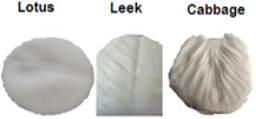
Finally, the replicated mold carrying the inverse surface patterns was extracted, as shown in
Figure 1, for use in biopolymer film imprinting.
Figure 1. Negative Template of Cabbage, Leek, and Lotus Leaves.
2.3. Preparation of the Biopolymer Coating
Films were prepared by the casting method as follows:
1) Soy protein solution: 10 g of soy protein was dissolved in 150 mL of distilled water
| [19] | Muhammad, F. R., & Paramita, V. (2024). Production of Edible Film from Isolate Soy Protein with Addition of Palmitic/Lauric Acids. Journal of Vocational Studies on Applied Research, 5(2), 57-61.
http://creativecommons.org/licenses/by-sa/4.0 |
[19]
.
2) Polyvinyl alcohol solution: A 10 (w/v)% concentration was prepared using water as a solvent.
3) The electronic balance from Sartorius (Germany) was used for precise measurements, with an accuracy of 0.0001 g.
2.3.1. Preparation of the Casting Solution
The mold solution was formulated using 95 wt% of the prepared protein solution, 3 wt% of the polyvinyl alcohol solution, and 2 wt% of glycerol. The mixture was stirred mechanically for four hours until complete homogenization and left for an additional four hours until the bubbles dissipated completely
| [20] | Luis, A., Domingues, F., & Ramos, A. (2019). Production of hydrophobic zein-based films bioinspired by the lotus leaf surface: characterization and bioactive properties. Microorganisms, 7(8), 267.
https://doi.org/10.3390/microorganisms7080267 |
[20]
.
2.3.2. Casting and Drying Process
Precise leveling of the glass plates was conducted using a leveling device before proceeding with the casting method, which involved:
1) Casting 50mL of the prepared polymer solution onto the negative molds formed on the glass plates designed for precise cavities.
2) Simultaneously, a comparison coating layer was applied to one of the glass plates.
3) The plates were then placed in an oven to dry at a temperature of 40°C for 24 hours.
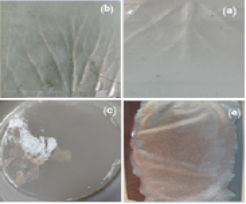
Finally, this process yielded films with a surface that mimics the hierarchical structure of the leaves used, along with a reference surface, as illustrated in
Figure 2.
Figure 2. Positive Print Films: (a) Leek, (b) Cabbage, (c) Lotus, (d) Control.
3. Experimental Methods and Measurements
3.1. Physical Properties
3.1.1. Water Vapor Transmission Rate (WVTR)
WVTR is defined as the amount of water vapor transmitted through a unit area of the coating over a specific time under controlled humidity and temperature conditions.
Food packaging coatings should exhibit low water vapor permeability to minimize moisture absorption, as a humid environment fosters microbial growth and accelerates food spoilage.
The water vapor permeability of the coatings was determined using the Wet Cup Method, as illustrated in
Figure 3. The test was conducted at room temperature following the ASTM E96 standard, which involves a cylindrical plastic container with a cross-sectional radius of 3.5 cm, filled to three-quarters of its volume with distilled water. The container’s opening was covered with a 4 × 4 cm coating sample, then securely sealed with adhesive applied along the edges of both the sample and the container to prevent vapor leakage. The container, including its contents, was weighed to a precision of 0.01 g.
The weight change was monitored daily for one week at room temperature. A graph was plotted representing weight reduction (g) versus time (days) to determine the slope of the resulting curve, which was then used to calculate the Water Vapor Transmission Rate (WVTR) using the corresponding equation.
where:
1) Δw/Δt is the rate of mass loss over time,
2) l represents film thickness (mm),
3) S is the surface area through which vapor transmission occurs (cm²).
Figure 3. Estimation of the Water Vapor Transmission Rate of the Prepared Coatings.
3.1.2. Water Contact Angle (WCA)
The measurement of contact angle (CA) provides insights into the hydrophilicity or hydrophobicity of film surfaces. Evaluating the wettability of the prepared coatings ensures their stability in humid environments, a crucial property for food preservation.
The contact angle (θ) is defined as the angle between the tangent of the liquid-vapor interface and the solid surface
| [21] | Manoharan, K., & Bhattacharya, S. (2019). Superhydrophobic surfaces review: Functional application, fabrication techniques and limitations. Journal of Micromanufacturing, 2(1), 59-78. https://doi.org/10.1177/2516598419836345 |
[21]
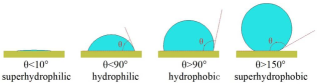
. As illustrated in
Figure 4, the contact angle for each surface was determined using the Sessile Drop Method with a Drop Goniometer (GH11 model, Kruss France), which is equipped with a high-resolution digital camera. The measurements were conducted at room temperature by depositing a 5 μL drop of distilled water onto the coating surfaces. A minimum of eight measurements was performed for each film to ensure accuracy.
Figure 4. Contact Angle Between a Liquid Droplet and a Solid Surface.
3.1.3. Film Thickness
The thickness of the films was measured using a micrometer, with ten measurements taken across different regions of each sample. The average thickness was then used for calculations regarding permeability properties.
3.2. Mechanical Properties
The mechanical tests were conducted at the Plastics Laboratory of the Technical Engineering Faculty and Tartous Port Company. These tests included the following:
3.2.1. Tensile Test
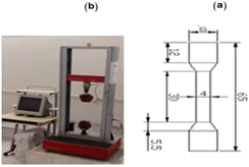
Figure 5. (a) Tensile Testing Apparatus and Test Specimen, (b) Dimensions of Tensile Specimen.
The tensile test is performed on a specimen to determine its properties under a uniaxial tensile load. The load is applied along the longitudinal axis of the sample, gradually increasing until the specimen fractures. This test is widely used due to its simplicity, ease of execution, and straightforward interpretation of results. The specimen is placed in the testing machine, subjected to tensile force, and the stress-strain relationship is recorded to determine:
1) Ultimate tensile strength (σM): The maximum load a material can sustain during elongation, represented by the highest value on the stress-strain graph.
2) Elongation at break (Eb): Indicates the material’s ability to stretch before breaking, representing the maximum deformation the material can endure before failure.
The tensile strength of the prepared samples was determined according to the ASTM D-638 standard using the tensile testing machine, as illustrated in
Figure 5.
3.2.2. Hardness Test
The Shore D hardness test was conducted in accordance with the DIN-53505 international standard at room temperature, using a Digital Shore Hardness Tester manufactured in Germany by Zwick. The test sample had dimensions of 40 × 40 × 6 mm.
Surface hardness plays a significant role in mechanical resistance, particularly when films are exposed to external factors such as scratching, abrasion, and the penetration of foreign objects into their structure. These influences accelerate degradation, reduce shelf life, and facilitate the permeation of moisture, bacteria, and other spoilage factors into food products.
3.3. Microbial Study
To evaluate the effectiveness of the prepared films in preserving fruits, bananas were wrapped using bio-inspired coatings derived from the studied leaves. A microbial analysis was conducted after 15 days of storage, comparing the coated samples with the uncoated control to assess the coatings’ ability to preserve bananas, which were sourced from the tropical forest in the Western Blata region of Tartous.
For this purpose, the microbial analysis test was performed at the Central Laboratory of the General Company for Tartous Port. The enumeration of microorganisms was performed according to the Syrian Standard Specification for the General Microbial Count (SCS No. 600, 2005)
| [1] | Perugini, F., Mastellone, M. L., & Arena, U. (2005). A life cycle assessment of mechanical and feedstock recycling options for management of plastic packaging wastes. Environmental Progress, 24(2), 137-154 https://doi.org/10.1002/ep.10078 |
[1]
, which includes:
1. Preparation of Plate Count Agar (PCA) as the culture medium for total microbial enumeration.
2. Preparation of the inoculum and serial dilution in accordance with Syrian Standard No. 2179 (2007)
.
3. After the incubation process, bacterial enumeration was conducted using a colony counter.
4. The bacterial count was determined by multiplying the number of colonies by the inverse of the dilution factor, ensuring a reference plate for each treatment.
The total microbial count in 1 g of the sample was calculated using the following equation:
Total count of Germs(TCG)=(2)
where:
TCG: represents total microbial count (CFU/g),
C: is the number of bacterial colonies,
d: the dilution factor.
4. Results and Discussion
4.1. Physical Properties
4.1.1. Water Vapor Transmission Rate (WVTR)
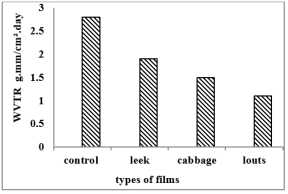
Figure 6. illustrates the water vapor transmission rate for the prepared films.
The WVTR of the bioinspired coatings was significantly reduced compared to the control sample, with an average thickness value of 250 µm for the leaf surfaces used. The lotus leaf negative imprint film exhibited the lowest water vapor permeability, with a 60% reduction compared to the control sample. The cabbage- and leek-inspired films also demonstrated substantial reductions (46% and 32%, respectively).
This improved barrier effect is attributed to the hierarchical surface structures inherited from the plant leaves. These micro- and Nano-scale roughness patterns create a more complex vapor diffusion pathway, making moisture penetration more difficult.
This aligns with the study conducted by Ghasemlou et al.
| [22] | Ghasemlou, M., Le, P. H., Daver, F., Murdoch, B. J., Ivanova, E. P., & Adhikari, B. (2021). Robust and eco-friendly superhydrophobic starch nanohybrid materials with engineered lotus leaf mimetic multiscale hierarchical structures. ACS Applied Materials & Interfaces, 13(30), 36558-36573.
https://doi.org/10.1021/acsami.1c09959 |
[22]
, where they fabricated a super hydrophobic surface using starch/polyhydroxyurethane/cellulose nanocrystal (SPC) composite:
1) By integrating a poly (dimethylsiloxane) (PDMS) coating and incorporating V-SNPs via secondary printing and spin coating, the WVTR decreased by 52% in SPC/PDMS/V-SNP films compared to uncoated samples.
2) This was attributed to the super hydrophobicity, which provides a stronger moisture barrier, maintaining minimal water contact while also blocking pores using functionalized silica particles, thus preventing water Therefore, it prevents water permeability through the film.
Figure 6. Water Vapor Transmission Rate (WVTR).
4.1.2. Water Contact Angle (WCA)
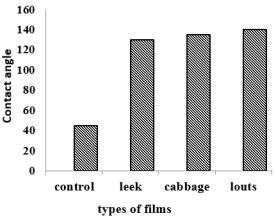
The measured contact angles showed a substantial increase in hydrophobicity of all bioinspired packaging films, as shown in
Figure 7. The lotus leaf negative imprint demonstrated the highest contact angle (140°), reflecting a 76% hydrophobicity improvement compared to the control (45°). The cabbage and leek-inspired films exhibited 65% and 64% improvements, respectively.
Figure 7. Change in Contact Angle of Coatings Inspired by the Surfaces of Some Plants.
These high contact angle values indicate effective hydrophobic surface structuring, reducing liquid adhesion and absorption. This aligns with research by Wang et al. (2020), who achieved artificial super hydrophobic edible coatings resembling lotus leaves, with a contact angle of 150°, using beeswax-based surface modifications
.
4.2. Mechanical Properties
4.2.1. Tensile Strength and Elongation at Break
It is observed from the results that the maximum tensile stress value for the sample for bioinspired films compared to the control as shown in the
Table 1:
1) Lotus imprint: 5% decrease
2) Cabbage imprint: 32% decrease
3) Leek imprint: 17% decrease
This is attributed to stress transfer occurring in a serial manner due to the shape of the bends and the ratio between the surface areas of the molds, which allows for stress distribution with non-uniform variation.
As for elongation during cutting, it was higher for each of the lotus, Cabbage and Leek negative molds than for the sample control that displayed consistent behavior:
1) Lotus imprint: 26% increase
2) Cabbage imprint: 13% increase
3) Leek imprint: 7% increase
This is because the surface of the prepared negative molds facilitates the alignment of polymer chains along the tensile axis, promoting elongation in a manner that enables reorientation of the polymer chains toward the protein, thereby increasing flexibility in comparison to the elongation values of the sample and
Table 1, which presents the maximum tensile stress and elongation at fracture for the prepared samples.
Table 1. Maximum Tensile Strength and Elongation at Break.
property | Control Sample | Louts imprint | Leek imprint | Cabbage imprint |
Maximum Tensile Strength (MPa) | 10.3 | 9.7 | 8.5 | 7 |
Elongation at Break (%) | 2.6 | 3.5 | 2.8 | 3 |
Similar results were reported by Li et al.
| [24] | Li, H., He, Y., Yang, J., Wang, X., Lan, T., &Peng, L. (2019). Fabrication of food-safe superhydrophobic cellulose paper with improved moisture and air barrier properties. Carbohydrate polymers, 211, 22-30.
https://doi.org/10.1016/j.carbpol.2019.01.107 |
[24]
, preparing water-resistant and food-safe paper with improved moisture resistance properties build hybrid layers of biopolymer and secondary clay, followed by treatment with carnauba wax—resulted in the modified paper sample (CR/CS/MMT/CS). The tensile strength decreased by 33.2% for the modified paper samples with multi-layered filmss (CR/CS/MMT/CS) due to the formation of a thin waxy layer with low surface energy and limited interaction depth between the fibers. The elongation at break increased for the mod.
4.2.2. Hardness Analysis
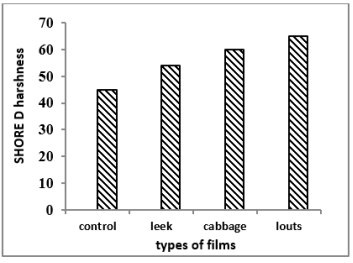
Figure 8. Hardness Values of the Prepared Coatings.
As shown in
Figure 8, the highest hardness value was recorded in the negative imprint of the lotus leaf, reaching 65 Shore, compared to the control sample which remained cohesive at 45 Shore. The negative imprint coatings of lotus, cabbage, and leek exhibited increased hardness compared to the control sample:
1) Lotus imprint: 30% improvement
2) Cabbage imprint: 25% improvement
3) Leek imprint: 16% improvement
This enhancement is attributed to the hierarchical structure, which increases surface roughness and consequently improves hardness.
These results are consistent with the study conducted by Zhou et al.
| [25] | Zhou, Z., Ma, J., Li, K., Zhang, W., Li, K., Tu, X.,... & Zhang, H. (2021). A plant leaf-mimetic membrane with controllable gas permeation for efficient preservation of perishable products. ACS nano, 15(5), 8742-8752.
https://doi.org/10.1021/acsnano.1c00997 |
[25],
where edible biofilms were developed by biomimicking the pores of plant leaves. By incorporating chitosan porous microspheres (CSPM) and PLLA porous microspheres (PPM) into a shellac matrix, hardness testing showed a 36% increase compared to pure shellac film, attributed to the acquired hierarchical structure following the addition.
4.3. Antimicrobial Activity
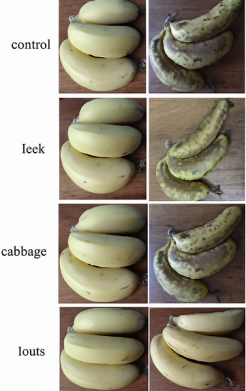
Randomly distributed brown spots were observed on uncovered bananas, which darkened progressively over 15 days of storage. - Spots were less prominent on bananas wrapped in films mimicking cabbage leaves. - Even less on those wrapped in films resembling leek surfaces. - Almost disappeared in bananas enclosed with a film mimicking the lotus leaf surface. This reflects the antibacterial properties inherent to the lotus leaf-inspired coating
Figure 9.
Figure 9. Morphological Appearance of Banana Fruits After 15 Days of Storage Using the Prepared Coatings.
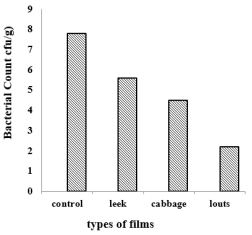
Antibacterial Capability: The coatings successfully reduced bacterial count compared to the control sample:
1. Lotus imprint: 72% reduction,
2. Cabbage imprint: 42% reduction,
3. Leek imprint: 28% reduction, as illustrated in
Figure 10.
Figure 10. Total Microbial Count for the Tested Banana Sample.
while
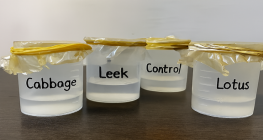
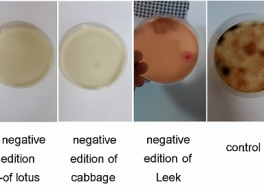
Figure 11 shows the wrapped banana samples alongside the control in Petri dishes.
Figure 11. Wrapped Banana Samples and the Control Sample.
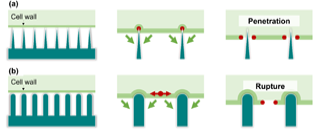
The hierarchical nanostructures acquired on coating surfaces not only minimize bacterial adhesion but also contribute to a mechanical microbicidal mechanism
Figure 12:
Penetration of nanoscale structures into the bacterial cell wall induces structural deformation, leading to rupture.
1. Membrane stretching upon contact with the surface is influenced by both the rigidity of the bacterial membrane and nanoscale adhesive interactions.
2. Once the membrane reaches its mechanical limit, it ruptures, causing cytoplasmic leakage and ultimately bacterial cell death
| [26] | Lee, M. S., Hussein, H. R., Chang, S. W., Chang, C. Y., Lin, Y. Y., Chien, Y.,... & Chang, C. C. (2023). Nature-inspired surface structures design for antimicrobial applications. International journal of molecular sciences, 24(2), 1348.
https://doi.org/10.3390/ijms24021348 |
[26].
Figure 12. Mechanical Microbicidal Mechanism.
Gomes (2023) confirmed a reduction of approximately (1-2 Log CFU/cm²) in the retention of L. monocytogenes and E. coli, respectively, on biomimetic surfaces of cabbage and kale leaves. These hydrophobic surfaces prevented bacterial adhesion, thereby inhibiting biofilm formation through hydrophobic barriers and their micron-scale structures
| [27] | Gomes, L. C., Saubade, F., Amin, M., Spall, J., Liauw, C. M., Mergulhão, F., & Whitehead, K. A. (2023). A comparison of vegetable leaves and replicated biomimetic surfaces on the binding of Escherichia coli and Listeria monocytogenes. Food and Bioproducts Processing, 137, 99-112.
https://doi.org/10.1016/j.fbp.2022.11.003 |
[27]
.
5. Conclusion
Based on the obtained results, we can conclude the following:
1. Bio-inspired coatings can be successfully prepared from the surfaces of lotus, cabbage, and leek leaves.
2. The coatings derived from negative imprints demonstrated a reduction in water vapor transmission rates of 60%, 46%, and 32% for lotus, cabbage, and leek, respectively, compared to the reference sample.
3. The highest contact angle (CA) was recorded for the negative imprint coating of lotus leaves (140°) compared to (45°) for the reference sample, indicating superior hydrophobic properties.
4. A decrease in tensile resistance was observed for the negative imprint coatings: 5% for lotus, 32% for cabbage, and 17% for leek, in comparison to the reference sample, which remained intact.
5. The negative imprint coating of lotus leaves excelled in elongation at break, hardness, and microbial resistance compared to other negative imprint coatings and the reference sample.
Abbreviations
CA | Contact Angle |
CFU | Colony Forming Unit |
CR | Carrageenan |
CS | Chitosan |
CSPM | Chitosan Porous Microspheres |
MMT | Montmorillonite |
PDMS | Poly (Dimethylsiloxane) |
PPM | Poly (L-Lactic Acid) Porous Microspheres |
SNPs | Silica Nanoparticles |
SPC | Starch/Polyhydroxyurethane/Cellulose Nanocrystal |
WCA | Water Contact Angle |
WVTR | Water Vapor Transmission Rate |
Conflicts of Interest
The authors declare no conflicts of interest.
References
| [1] |
Perugini, F., Mastellone, M. L., & Arena, U. (2005). A life cycle assessment of mechanical and feedstock recycling options for management of plastic packaging wastes. Environmental Progress, 24(2), 137-154
https://doi.org/10.1002/ep.10078
|
| [2] |
Geyer, R., Jambeck, J. R., & Law, K. L. (2017). Production, use, and fate of all plastics ever made. Science advances, 3(7), e1700782
https://doi.org/10.1126/sciadv.1700782
|
| [3] |
Mohammed, A., Gaduan, A., Chaitram, P., Pooran, A., Lee, K. Y., & Ward, K. (2023). Sargassum inspired, optimized calcium alginate bioplastic composites for food packaging. Food Hydrocolloids, 135, 108192
https://doi.org/10.1016/j.foodhyd.2022.108192
|
| [4] |
Gandini, A. (2008). Polymers from renewable resources: a challenge for the future of macromolecular materials. Macromolecules, 41(24), 9491-9504
https://doi.org/10.1021/ma801735u
|
| [5] |
Guzmán‐Puyol, S., Heredia, A., Heredia‐Guerrero, J. A., &Benítez, J. J. (2021). Cutin‐Inspired Polymers and Plant Cuticle‐like Composites as Sustainable Food Packaging Materials. Sustainable food packaging technology, 161-198
https://doi.org/10.1002/9783527820078.ch6
|
| [6] |
Shen, L., Worrell, E., & Patel, M. (2010). Present and future development in plastics from biomass. Biofuels, Bioproducts and Biorefining: Innovation for a sustainable economy, 4(1), 25-40
https://doi.org/10.1002/bbb.189
|
| [7] |
Vilela, C., Sousa, A. F., Fonseca, A. C., Serra, A. C., Coelho, J. F., Freire, C. S., & Silvestre, A. J. (2014). The quest for sustainable polyesters–insights into the future. Polymer Chemistry, 5(9), 3119-3141
https://doi.org/10.1039/C3PY01213A
|
| [8] |
Cui, S., Yao, B., Sun, X., Hu, J., Zhou, Y., & Liu, Y. (2016). Reducing the content of carrier polymer in pectin nanofibers by electrospinning at low loading followed with selective washing. Materials Science and Engineering: C, 59, 885-893.
https://doi.org/10.1016/j.msec.2015.10.086
|
| [9] |
Tedeschi, G., Benitez, J. J., Ceseracciu, L., Dastmalchi, K., Itin, B., Stark, R. E.,... & Heredia-Guerrero, J. A. (2018). Sustainable fabrication of plant cuticle-like packaging films from tomato pomace agro-waste, beeswax, and alginate. ACS Sustainable Chemistry & Engineering, 6(11), 14955-14966.
https://doi.org/10.1021/acssuschemeng.8b03450
|
| [10] |
Bensaude-Vincent, B. (2007). Reconfiguring nature through syntheses: From plastics to biomimetics.
|
| [11] |
Wang, Q., Xu, S., Xing, X., & Wang, N. (2021). Progress in fabrication and applications of micro/nanostructured superhydrophobic surfaces. Surface Innovations, 10(2), 89-110.
https://doi.org/10.1680/jsuin.21.00031
|
| [12] |
Chen, L., Duan, Y., Cui, M., Huang, R., Su, R., Qi, W., & He, Z. (2021). Biomimetic surface coatings for marine antifouling: Natural antifoulants, synthetic polymers and surface microtopography. Science of the Total Environment, 766, 144469.
https://doi.org/10.1016/j.scitotenv.2020.144469
|
| [13] |
Shen, T., Fan, S., Li, Y., Xu, G., & Fan, W. (2020). Preparation of edible non-wettable coating with soybean wax for repelling liquid foods with little residue. Materials, 13(15), 3308
https://doi.org/10.3390/ma13153308
|
| [14] |
Ruzi, M., Celik, N., &Onses, M. S. (2022). Superhydrophobic coatings for food packaging applications: A review. Food Packaging and Shelf Life, 32, 100823.
https://doi.org/10.1016/j.fpsl.2022.100823
|
| [15] |
Hwang, J. J., Wu, C. Y., Hung, Y. H., Li, M. X., Luo, K. H., Jia, H. W.,... &Yeh, J. M. (2023). Biomimetic PMMA coating surface and its application on inhibition of bacterial attachment and anti-biofilm performance. Surfaces and Interfaces, 36, 102548.
https://doi.org/10.1016/j.surfin.2022.102548
|
| [16] |
Alon, H., Vitoshkin, H., Ziv, C., Gunamalai, L., Sinitsa, S., &Kleiman, M. (2022). Self-cleaning biomimetic surfaces—the effect of microstructure and hydrophobicity on conidia repellence. Materials, 15(7), 2526.
https://doi.org/10.3390/ma15072526
|
| [17] |
Chang, K. C., Chuang, T. L., Ji, W. F., Chang, C. H., Peng, Y. Y., Shih, H.,... & Su, Y. C. (2015). UV-curable nanocasting technique to prepare bioinspiredsuperhydrophobic organic-inorganic composite anticorrosion coatings. Express PolymerLetters, 9(2).
https://doi.org/10.3144/expresspolymlett.2015.15
|
| [18] |
Sun, M., Luo, C., Xu, L., Ji, H., Ouyang, Q., Yu, D., & Chen, Y. (2005). Artificial lotus leaf by nanocasting. Langmuir, 21(19), 8978-8981.
|
| [19] |
Muhammad, F. R., & Paramita, V. (2024). Production of Edible Film from Isolate Soy Protein with Addition of Palmitic/Lauric Acids. Journal of Vocational Studies on Applied Research, 5(2), 57-61.
http://creativecommons.org/licenses/by-sa/4.0
|
| [20] |
Luis, A., Domingues, F., & Ramos, A. (2019). Production of hydrophobic zein-based films bioinspired by the lotus leaf surface: characterization and bioactive properties. Microorganisms, 7(8), 267.
https://doi.org/10.3390/microorganisms7080267
|
| [21] |
Manoharan, K., & Bhattacharya, S. (2019). Superhydrophobic surfaces review: Functional application, fabrication techniques and limitations. Journal of Micromanufacturing, 2(1), 59-78.
https://doi.org/10.1177/2516598419836345
|
| [22] |
Ghasemlou, M., Le, P. H., Daver, F., Murdoch, B. J., Ivanova, E. P., & Adhikari, B. (2021). Robust and eco-friendly superhydrophobic starch nanohybrid materials with engineered lotus leaf mimetic multiscale hierarchical structures. ACS Applied Materials & Interfaces, 13(30), 36558-36573.
https://doi.org/10.1021/acsami.1c09959
|
| [23] |
Wang, D., Huang, J., &Guo, Z. (2020). Tomato-lotus inspired edible superhydrophobic artificial lotus leaf. Chemical Engineering Journal, 400, 125.
https://doi.org/10.1016/j.cej.2020.125883
|
| [24] |
Li, H., He, Y., Yang, J., Wang, X., Lan, T., &Peng, L. (2019). Fabrication of food-safe superhydrophobic cellulose paper with improved moisture and air barrier properties. Carbohydrate polymers, 211, 22-30.
https://doi.org/10.1016/j.carbpol.2019.01.107
|
| [25] |
Zhou, Z., Ma, J., Li, K., Zhang, W., Li, K., Tu, X.,... & Zhang, H. (2021). A plant leaf-mimetic membrane with controllable gas permeation for efficient preservation of perishable products. ACS nano, 15(5), 8742-8752.
https://doi.org/10.1021/acsnano.1c00997
|
| [26] |
Lee, M. S., Hussein, H. R., Chang, S. W., Chang, C. Y., Lin, Y. Y., Chien, Y.,... & Chang, C. C. (2023). Nature-inspired surface structures design for antimicrobial applications. International journal of molecular sciences, 24(2), 1348.
https://doi.org/10.3390/ijms24021348
|
| [27] |
Gomes, L. C., Saubade, F., Amin, M., Spall, J., Liauw, C. M., Mergulhão, F., & Whitehead, K. A. (2023). A comparison of vegetable leaves and replicated biomimetic surfaces on the binding of Escherichia coli and Listeria monocytogenes. Food and Bioproducts Processing, 137, 99-112.
https://doi.org/10.1016/j.fbp.2022.11.003
|
Cite This Article
-
APA Style
Ghanem, M., Moalla, A. (2026). Improving the Hydrophobic and Antimicrobial Properties of Edible Films by Bioinspiration of Some Plant Leaf Surfaces. International Journal of Food Engineering and Technology, 10(1), 1-9. https://doi.org/10.11648/j.ijfet.20261001.11
 Copy
|
Copy
|
 Download
ACS Style
Ghanem, M.; Moalla, A. Improving the Hydrophobic and Antimicrobial Properties of Edible Films by Bioinspiration of Some Plant Leaf Surfaces. Int. J. Food Eng. Technol. 2026, 10(1), 1-9. doi: 10.11648/j.ijfet.20261001.11
Copy
|
Download
AMA Style
Ghanem M, Moalla A. Improving the Hydrophobic and Antimicrobial Properties of Edible Films by Bioinspiration of Some Plant Leaf Surfaces. Int J Food Eng Technol. 2026;10(1):1-9. doi: 10.11648/j.ijfet.20261001.11
Copy
|
Download
-
@article{10.11648/j.ijfet.20261001.11,
  author = {Mosab Ghanem and Arij Moalla},
  title = {Improving the Hydrophobic and Antimicrobial Properties of Edible Films by Bioinspiration of Some Plant Leaf Surfaces},
  journal = {International Journal of Food Engineering and Technology},
  volume = {10},
  number = {1},
  pages = {1-9},
  doi = {10.11648/j.ijfet.20261001.11},
  url = {https://doi.org/10.11648/j.ijfet.20261001.11},
  eprint = {https://article.sciencepublishinggroup.com/pdf/10.11648.j.ijfet.20261001.11},
  abstract = {The aim of this study was to improve the hydrophobic and antimicrobial properties of edible films by replicating the geometric structures of selected plant leaves. Soy protein isolate (SPI) films were prepared using the solvent casting technique on negative templates of lotus, cabbage, and leek leaves to simulate their surface topographies. Since surface morphology plays a critical role in reducing bacterial biofilm formation, the prepared films were characterized by measuring contact angle, water vapor permeability, and mechanical properties, while antimicrobial activity was evaluated through bacterial analysis according to international standards. The results showed that bioinspired structuring significantly enhanced water resistance, with the lotus leaf template providing the greatest improvement. The contact angle of the lotus-inspired coating reached 140°, compared to 45° for the control sample, indicating a substantial increase in hydrophobicity. Bacterial analysis confirmed that the lotus leaf surface exhibited the highest antibacterial activity, as banana fruit wrapped in this coating showed the lowest bacterial count (2.2 CFU/g). Mechanical testing revealed that tensile strength decreased slightly by 5%, while elongation at break improved by 26% and hardness increased by 30% compared to the control. These findings demonstrate that edible films inspired by plant leaf surfaces can achieve a balance between enhanced hydrophobicity, antimicrobial activity, and acceptable mechanical performance. The approach highlights the potential of bioinspired edible films as sustainable food packaging materials that reduce reliance on synthetic plastics and contribute to environmentally friendly preservation strategies.},
 year = {2026}
}
Copy
|
Download
-
TY  - JOUR
T1  - Improving the Hydrophobic and Antimicrobial Properties of Edible Films by Bioinspiration of Some Plant Leaf Surfaces
AU  - Mosab Ghanem
AU  - Arij Moalla
Y1  - 2026/03/19
PY  - 2026
N1  - https://doi.org/10.11648/j.ijfet.20261001.11
DO  - 10.11648/j.ijfet.20261001.11
T2  - International Journal of Food Engineering and Technology
JF  - International Journal of Food Engineering and Technology
JO  - International Journal of Food Engineering and Technology
SP  - 1
EP  - 9
PB  - Science Publishing Group
SN  - 2640-1584
UR  - https://doi.org/10.11648/j.ijfet.20261001.11
AB  - The aim of this study was to improve the hydrophobic and antimicrobial properties of edible films by replicating the geometric structures of selected plant leaves. Soy protein isolate (SPI) films were prepared using the solvent casting technique on negative templates of lotus, cabbage, and leek leaves to simulate their surface topographies. Since surface morphology plays a critical role in reducing bacterial biofilm formation, the prepared films were characterized by measuring contact angle, water vapor permeability, and mechanical properties, while antimicrobial activity was evaluated through bacterial analysis according to international standards. The results showed that bioinspired structuring significantly enhanced water resistance, with the lotus leaf template providing the greatest improvement. The contact angle of the lotus-inspired coating reached 140°, compared to 45° for the control sample, indicating a substantial increase in hydrophobicity. Bacterial analysis confirmed that the lotus leaf surface exhibited the highest antibacterial activity, as banana fruit wrapped in this coating showed the lowest bacterial count (2.2 CFU/g). Mechanical testing revealed that tensile strength decreased slightly by 5%, while elongation at break improved by 26% and hardness increased by 30% compared to the control. These findings demonstrate that edible films inspired by plant leaf surfaces can achieve a balance between enhanced hydrophobicity, antimicrobial activity, and acceptable mechanical performance. The approach highlights the potential of bioinspired edible films as sustainable food packaging materials that reduce reliance on synthetic plastics and contribute to environmentally friendly preservation strategies.
VL  - 10
IS  - 1
ER  -
Copy
|
Download





 Share This Article
 Twitter
 Linked In
 Facebook