1. Introduction
1.1. Background
According to the Uganda Bureau of Statistics (UBOS), the 2024 National Population and Housing Census reported that approximately 13.2% of Uganda's population about 5.5 million people live with some form of disability (UBOS)
. Despite global and regional commitments such as the UN Convention on the Rights of Persons with Disabilities (UNCRPD), which Uganda ratified in 2008, and the Protocol to the African Charter on Human and Peoples' Rights on the Rights of Older Persons in Africa
, which recognizes the intersectionality of age and disability in digital exclusion, Persons with Disabilities (PWDs) remain significantly underrepresented in education, employment, and access to Information and Communication Technology (ICT).
Seale
found out that digital inclusion for PWDs can lead to significant improvements in quality of life, social participation, and economic opportunities. However, PWDs in Uganda face persistent barriers to digital access. Many lack basic digital devices due to affordability constraints, and even when devices are available, they often lack necessary accessibility features. Digital literacy levels remain low, with limited opportunities for structured, inclusive training (Goggin & Newell)
. Additional barriers include shortage of trainers with disability-inclusive expertise, inaccessible training venues, high costs of assistive technologies, and poor internet connectivity, particularly in rural areas (Kavuma & Kintu)
.
While Uganda's policy frameworks including the Persons with Disabilities Act and the Revised National Policy on Persons with Disability emphasize accessibility and assistive devices, implementation has been hampered by insufficient funding, poor coordination, and minimal enforcement mechanisms (Government of Uganda
; MoGLSD,
).
The World Health Organization (2022) estimates that only 10% of people who need assistive technologies have access to them globally, with the gap being most severe in low-income countries. McNicholl et al.
found that lack of awareness about available assistive technologies, combined with high costs and limited technical support, prevents most PWDs in East Africa from benefiting from digital innovations.
Recognizing these challenges, the Uganda Communications Commission (UCC), through the Uganda Communications Universal Service and Access Fund (UCUSAF), supported the National Union of Disabled Persons of Uganda (NUDIPU) and Eight Tech Consults Ltd to implement digital inclusion initiatives for PWDs. Between 2021 and 2024, earlier phases developed a National PWD Digital Observatory profiling over 80,000 PWDs, delivered digital literacy training to over 20,000 PWDs, and created a PWD-focused curriculum translated into five (5) local languages.
Building on these achievements, Year 1 of the current phase trained 1,010 participants, primarily those with visual and hearing impairments, across 28 districts. The training adopted the Eight Tech Community Centric Digital Skilling Approach, emphasizing accessibility through tailor ed curriculum, interactive workshops, hands-on sessions, sign language interpretation, screen readers, and facilitators with lived disability experience. This multi-stakeholder partnership model leveraged government (UCC/UCUSAF), civil society (NUDIPU and District Unions), and private sector (Eight Tech Consults) strengths to achieve greater reach and impact.
This paper evaluates this multi-partner digital skilling model by examining training reach, changes in digital competence, accessibility of the training approach, challenges encountered, and sustainability potential, contributing evidence on effective digital inclusion approaches for PWDs in Sub-Saharan Africa.
1.2. Problem Statement
Despite policy commitments and growing recognition of digital inclusion as a human right, PWDs in Uganda face a persistent digital divide that limits their participation in the digital economy. Several critical gaps remain unaddressed in existing digital literacy interventions.
There is limited empirical evidence on effective digital skilling models for PWDs in Uganda. Most training programs lack accessibility features, excluding individuals with visual and hearing impairments who face the greatest barriers. Second, sustainability remains questionable as participants often lack continued device access and ongoing support, leading to rapid skill deterioration. Third, multi-stakeholder partnerships in digital inclusion have not been systematically evaluated, leaving unclear how government, civil society, and private sector actors can effectively collaborate. Fourth, insufficient understanding exists of specific barriers different disability categories face in acquiring digital skills.
This study addresses these gaps by evaluating the ICT4PWDs Year 1 model across 28 districts, examining:
1) Training effectiveness in enhancing digital competence
2) Accessibility and inclusiveness of methodology
3) Barriers and enablers across disability categories
4) Participant satisfaction and sustainability potential.
The findings contribute to developing more effective, scalable digital inclusion strategies for PWDs in Uganda and Sub-Saharan Africa.
1.3. Research Objectives
The overall objective of this research is to evaluate the effectiveness of a multi-partner digital skilling model in enhancing digital inclusion for Persons with Disabilities in Uganda.
Specific Objectives
1) To assess the reach and implementation of the multi-partner digital skilling model across different regions and disability categories.
2) To examine the accessibility and inclusiveness of the training approach in accommodating diverse disability needs.
3) To identify key challenges and enablers affecting the effectiveness of the multi-partner model in delivering digital skills training.
4) To explore the sustainability potential and scalability of the multi-partner digital skilling model.
1.4. Significance of the Study
This study makes several important contributions to knowledge, policy, and practice in the field of digital inclusion for Persons with Disabilities.
Contribution to Knowledge: The study provides empirical evidence on the effectiveness of multi-stakeholder partnerships in delivering digital literacy training to PWDs in a Sub-Saharan African context. It adds to the limited body of research on disability-inclusive digital education by documenting what works, what doesn't, and why, particularly for individuals with visual and hearing impairments. The disaggregated findings across different disability categories offer valuable insights into the specific needs, challenges, and learning outcomes of diverse PWD groups.
Policy Implications: The findings inform evidence-based policy development for digital inclusion in Uganda and beyond. By documenting the outcomes of a partnership between government (UCC/UCUSAF), civil society (NUDIPU), and private sector (Eight Tech Consults), the study provides policymakers with a tested model for scaling digital literacy interventions. It highlights critical areas requiring policy attention, including funding mechanisms, infrastructure development, assistive technology provision, and coordination frameworks for multi-stakeholder collaboration.
Practical Value: For practitioners and implementing organizations, the study offers practical guidance on designing and delivering accessible digital literacy training. The detailed documentation of training methodology, accessibility mechanisms, and participant feedback provides a roadmap for similar initiatives across Sub-Saharan Africa. The identification of barriers such as limited training duration, insufficient devices, and infrastructure challenges enables future programs to proactively address these constraints.
Contribution to SDGs and UNCRPD: The study contributes to achieving Sustainable Development Goals, particularly SDG 4 (Quality Education), SDG 8 (Decent Work and Economic Growth), and SDG 10 (Reduced Inequalities), by demonstrating pathways to enhance digital inclusion for marginalized populations. It also supports Uganda's commitments under the UNCRPD by providing evidence on how to ensure PWDs can access information and communication technologies on an equal basis with others.
4. Results and Findings
This section presents the findings from the evaluation of the ICT4PWDs Year 1 digital skilling initiative. The results are organized around the four core research objectives and draw on a combination of quantitative data from 1,010 participants across 28 districts and qualitative insights from field observations, participant feedback, and key informant interviews. Together, they offer a comprehensive understanding of the model’s reach, accessibility, effectiveness, and sustainability.
4.1. Participant Demographics
The ICT4PWDs Year 1 initiative was implemented across twenty-eight districts, carefully selected to ensure national representation and diversity in disability prevalence, infrastructure, and socio-economic conditions. These districts spanned all five regions of Uganda i.e. Central, Eastern, Northern, Western, and West Nile and were chosen during an inception meeting involving the Uganda Communications Commission (UCC), the National Union of Disabled Persons of Uganda (NUDIPU), and Eight Tech Consults Ltd. The selection process prioritized geographic spread and inclusion of both urban and rural contexts, enabling the program to capture regional variations in digital access and disability dynamics.
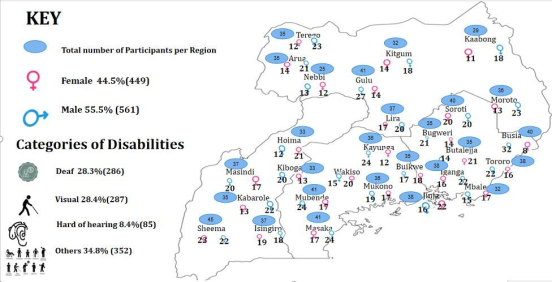
Figure 1. Participant Demographics by Gender and Disability Category.
Participant mobilization was led by District Union chairpersons, who served as regional coordinators and were responsible for recruiting 35 participants per district. The recruitment process emphasized inclusion of individuals with visual and hearing impairments, who often face the greatest barriers to digital access. Although the initial target was 980 participants, the program ultimately trained 1,010 individuals, reflecting strong demand and effective community engagement. The demographic composition of the participants was diverse, with 55.5% (561) identifying as male and 44.5% (449) as female. In terms of disability categories, 28.4% of participants had visual impairments, 28.3 percent were deaf, 8.4% were hard of hearing, and the remaining 34.8% represented other forms of disability, including physical, intellectual, and psychosocial impairments.
4.2. Training Outcomes
The ICT4PWDs Year 1 program delivered a total of 56 training sessions across 28 districts, with two full-day sessions conducted in each district. Each training day ran from 8:00 AM to 4:00 PM, providing approximately 16 hours of instructional time per district. The training curriculum was structured around seven core modules: (1) Understanding Disability, (2) Introduction to Digital Devices and Software Operations, (3) Inclusivity and Accessibility Features and Tools, (4) Use of Basic Digital Applications, (5) Communication Using Internet, Email and Social Media, (6) Electronic Services, and (7) Online and Electronic User Safety and Security.
The sessions employed a blended learning approach combining theoretical instruction with hands-on practical exercises. 6 regional training teams were deployed, each comprising facilitators from both NUDIPU and Eight Tech. To support practical learning, each team was equipped with 10 laptops and 10 smartphones that participants used during hands-on sessions. A distinctive feature of the training was the inclusion of facilitators with lived disability experience each team included at least one trainer who was either visually impaired or deaf, enhancing relatability and demonstrating the practical application of assistive technologies.
The training sessions were delivered in participants preferred local languages to enhance comprehension and engagement. Sign language interpretation was provided throughout all sessions, with two qualified interpreters present at each training. Additionally, accessibility features such as screen readers (TalkBack, Narrator) were activated on all devices used during training, and content was made available in both print and soft copy formats at District Union offices for post-training reference.
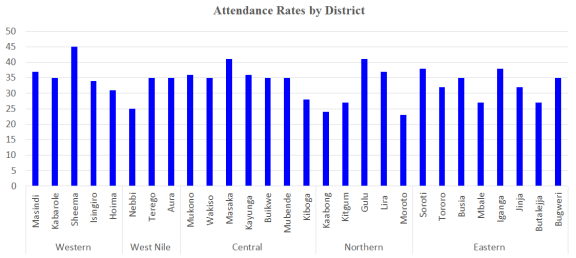
The program achieved exceptional completion rates, with 96.1% of participants attending both days of training. Of the 1,010 participants who enrolled, 971 completed the full two-day program and were eligible for certification. The high completion rate can be attributed to several factors which included strong community mobilization through District Unions, some participants reporting to have worked with the computers for their very first time, accessible and inclusive training methodology, and the relevance of content to participants' daily needs.
Attendance patterns revealed interesting dynamics across the districts as illustrated below;
Figure 2. Regional Distribution of Participants.
Regional analysis showed that the Eastern region had the highest overall participation rate at 32.3% (332), participants), followed by Central at 24.7% (254), Northern at 17% (175), western at 16.7% (172) and West Nile at 9% (94). These variations reflected both population distribution and the strength of District Union mobilization networks in different regions.
4.3. Pre - and Post-training Assessments
To measure the training's effectiveness, participants completed pre- and post-training assessments evaluating their digital competence across seven key skill areas: understanding disability categories, using digital devices, operating basic applications, navigating internet tools, utilizing accessibility features, and practicing online safety. Participants rated their confidence levels on a four-point scale: Poor, Fair, Good, and Very Confident.
1) Pre-Training Digital Competence
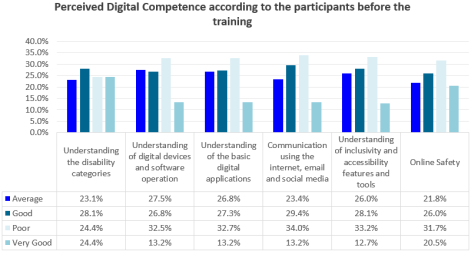
Prior to the training, participants demonstrated generally low digital confidence across all skill areas. Only approximately 13% felt Very Confident in using digital devices, basic applications, and internet tools on average, while over 32% rated their abilities as Poor in each of these areas. Understanding of accessibility tools was particularly limited, with fewer than 21% feeling very confident and roughly one-third rating their ability as poor. These baseline findings confirmed the critical need for targeted digital literacy interventions for PWDs.
Figure 3. Pre-Training Digital Competence Levels.
Qualitative feedback from trainers during initial sessions confirmed these quantitative findings. Many participants expressed excitement and nervousness about using computers or smartphones for the first time. As one trainer noted: "Most participants were touching a computer for the first time and needed significant hand-holding through even basic operations like turning on the device or using a mouse." Several visually impaired participants were unaware that assistive technologies like screen readers, be my eyes and cash reader existed, while deaf participants had never encountered live captioning features.
2) Post-Training Digital Competence
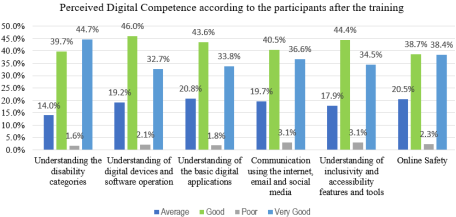
Following the two-day training intervention, participants reported substantial and consistent improvements across all digital skill areas. The percentage of participants rating themselves as Very Confident nearly tripled on average, rising from approximately 13% to 38% across most skill areas. Simultaneously, the proportion rating their skills as Poor dropped dramatically to an average of just 2%, representing a 94% reduction in low confidence ratings.
Figure 4. Post-Training Digital Competence Levels.
The magnitude of improvement was consistent across different disability categories, though with some variations. Among visually impaired participants, 98% reported significant improvement in their ability to use assistive technologies like Be My Eyes, Cash Reader, and TalkBack. As one visually impaired participant from Jinja testified: "Before I had no knowledge about phones and computers, but now I can use them without any assistance." Similarly, 95% of deaf participants confirmed the training was beneficial, with many expressing particular appreciation for learning about live captions and sign language video calling features.
Analysis by gender revealed equitable outcomes, with male and female participants reporting similar levels of confidence improvement. This parity suggests the training methodology successfully accommodated diverse learning needs without gender bias. Regional analysis showed consistent improvement across all five regions, though participants in urban areas (Central and parts of Eastern regions) reported slightly higher post-training confidence levels, possibly due to greater prior exposure to digital technologies.
4.4. Skills Retention and Application Intentions
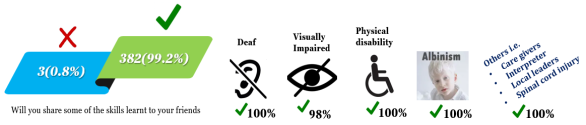
Beyond confidence levels, the assessment explored participants' intentions to apply newly acquired skills. An overwhelming 96.1% (971 participants) reported that the training helped them gain new digital skills and feel more confident using digital tools. More importantly, 99.2% (1,002 participants) expressed willingness to share their acquired skills with other PWDs in their communities, demonstrating strong potential for peer-to-peer learning and organic skills diffusion.
Figure 5. Willingness of Participants to Share Learned Digital Skills with Others, Disaggregated by Disability Category.
These findings align with training curriculum priorities, which emphasized practical, immediately applicable skills. The high confidence in using assistive applications was particularly encouraging, as many participants had never encountered these tools before training. Trainer observations confirmed that hands-on practice with these applications during training sessions generated significant enthusiasm and breakthrough moments for participants who suddenly realized the extent to which technology could enhance their independence.
4.5. Testimonials from Participants and Stakeholders
Participants across all 28 districts shared powerful stories of how the training impacted their confidence, independence, and outlook on life. These testimonials revealed several recurring themes: discovery of assistive technologies, newfound independence and dignity, economic empowerment possibilities, social connection and reduced isolation, and shifts in self-perception and aspirations.
A blind beneficiary from Masindi District, shared: "Before the training, I was unaware that there were technologies available for blind people to use on phones. I am so excited about learning to use tools like the cash reader for scanning money and a talking phone. These tools will be very helpful in my daily life, and because of the training, I am now motivated to buy a phone soon."
Another beneficiary from Mukono district expressed similar sentiments: "I want to thank the trainers for the digital skills training, which introduced me to assistive technologies for the blind. These tools have transformed my life and positively changed my mindset. I appreciate UCC, NUDIPU and Eight Tech for the opportunity granted."
A a blind beneficiary from Busia district, stated: "I am excited about discovering the Cash Reader app and how it will support me in managing my business. I also learned how to access the Observatory platform, where I can now find and apply for job opportunities with ease."
Observations from Trainers and Field Coordinators
Trainers consistently noted high levels of enthusiasm and engagement among participants, particularly during hands-on sessions with assistive technologies. One trainer observed: "The moment we introduced Be My Eyes and Cash Reader to visually impaired participants, you could see their faces light up. Many had tears of joy realizing that technology could give them independence they never thought possible."
However, trainers also noted significant variation in learning pace, with participants who had some prior digital exposure progressing more quickly than complete beginners. A trainer from the Eastern region noted: "We had to constantly balance the needs of those touching computers for the first time with those who had used smartphones before. Group learning helped, as those with more experience naturally assisted beginners, but it also meant we couldn't cover as much content as planned."
4.6. Partnership Contributions
The success of the ICT4PWDs Year 1 initiative was fundamentally rooted in the strategic collaboration between three core partners: the Uganda Communications Commission (UCC) through the Uganda Communications Universal Service and Access Fund (UCUSAF), the National Union of Disabled Persons of Uganda (NUDIPU), and Eight Tech Consults Ltd. Each partner brought distinct capabilities, resources, and networks that, when integrated, created a model greater than the sum of its parts. This section examines the specific roles, responsibilities, and contributions of each partner, as well as the coordination mechanisms that enabled effective collaboration.
4.6.1. Roles and Responsibilities of Each Partner
1) Uganda Communications Commission (UCC) / UCUSAF
UCC, through UCUSAF, served as the primary funding agency and policy anchor for the initiative. The commission's mandate under sections 3 and 5 of the Uganda Communications Act 2013 is to promote equitable access to communication services for all Ugandans, including marginalized groups. In this project, UCC's role extended beyond financial provision to encompass strategic oversight and policy alignment.
UCC deployed monitoring teams to randomly selected training sites to observe sessions, interact with participants, and assess training quality. This oversight function ensured accountability and enabled real-time feedback to implementing partners. UCC's monitoring framework tracked key performance indicators including participant numbers and demographics, training completion rates, participant satisfaction scores, accessibility compliance, and partnership coordination effectiveness.
2) National Union of Disabled Persons of Uganda (NUDIPU)
NUDIPU, as the national umbrella organization for PWDs in Uganda, served as the lead implementing partner responsible for community mobilization and ensuring disability inclusion throughout implementation. NUDIPU's extensive grassroots network and deep understanding of disability dynamics in Uganda made it uniquely positioned to lead community engagement.
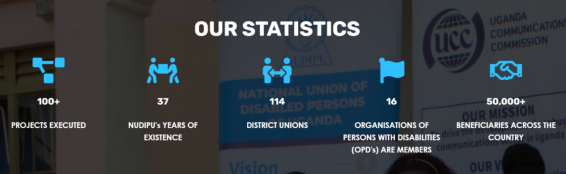
NUDIPU's most critical contribution was leveraging its network of District Unions (DUs) in all 135 districts of Uganda. For this project, DU chairpersons in the 28 selected districts served as regional coordinators responsible for identifying and recruiting participants based on agreed criteria (disability type, gender balance, geographic spread, age diversity). This grassroots mobilization approach ensured the program reached PWDs who are often invisible to mainstream initiatives, including those in remote rural areas. DU coordinators conducted pre-training sensitization meetings, explaining the program objectives, addressing concerns about accessibility, and building trust within the PWD community.
NUDIPU provided technical expertise on disability inclusion, reviewing training materials for accessibility, advising on reasonable accommodations for different disability types, training Eight Tech facilitators on disability etiquette and communication, and ensuring the program reflected principles of the UN Convention on the Rights of Persons with Disabilities (UNCRPD). NUDIPU representatives participated in all training sessions, observing implementation and providing immediate feedback on inclusion effectiveness.
Figure 6. NUDIPU’s Reach and Impact: Projects, District Unions, Member Organizations, and Beneficiaries Nationwide.
NUDIPU's District Union Coordination Structure
3) Eight Tech Consults Ltd
Eight Tech brought specialized technical expertise in digital systems development, digital education, curriculum development, and ICT training methodologies. The company's role focused on the technological infrastructure, pedagogical design, and digital literacy training delivery, complementing NUDIPU's disability expertise and assistive technology training.
Digital Observatory Development and Implementation: One of Eight Tech's most significant technical contributions was the development and operationalization of the National PWD Digital Observatory, a comprehensive digital platform designed to profile PWDs and link them to services. This web-based system enabled systematic collection and management of PWD data including demographic information (age, gender, location, disability type), digital device ownership and usage patterns, skills assessments and training participation records, and linkages to over 200 service providers (employment agencies, financial services, healthcare facilities, educational institutions).
During Year 1 implementation, the Observatory served as the backbone for participant registration and tracking. All 1,010 trained participants were profiled on the platform, creating digital identities that could facilitate future engagement with services, training opportunities, and employment prospects. The system's reporting capabilities enabled real-time monitoring of training reach, disaggregated by gender, disability type, region, and other key variables, supporting evidence-based decision-making throughout implementation. The Observatory represented a critical innovation in disability-inclusive data management, addressing the historical invisibility of PWDs in national databases and development programs.
4.6.2. Resources Contributed by Each Partner
The multi-partner model's strength lay in the complementary resources each partner contributed, creating efficiencies and synergies impossible in single-actor implementations.
Financial Resources. UCC/UCUSAF provided 100% of direct financial resources. This funding covered all operational costs, ensuring the program remained free for participants a critical factor given widespread poverty among PWDs. NUDIPU and Eight Tech contributed in-kind resources including staff time beyond contracted hours, existing organizational infrastructure (offices, communication systems), established networks and relationships, and institutional reputation and credibility.
Human Resources: The initiative engaged approximately 150 individuals across the three organizations including 6 regional training teams (30 facilitators), 28 District Union coordinators, 56 sign language interpreters (2 per district), NUDIPU headquarters coordination team (5 staff), Eight Tech management and M&E team (8 staff), and UCC oversight and monitoring team (4 staff). This significant human resource investment reflected the labour-intensive nature of inclusive, community-based training.
Technical Resources: Partners contributed diverse technical capabilities including UCC's policy expertise and government linkages, NUDIPU's disability rights knowledge and grassroots networks, and Eight Tech's digital education pedagogy and technology infrastructure. These complementary technical resources enabled the program to address multiple dimensions of digital inclusion simultaneously technological, social, institutional, and cultural.
Physical Resources: Beyond financial contributions, partners provided access to physical resources including NUDIPU's district union offices for pre-training meetings and post-training material storage, Eight Tech's training equipment (laptops, smartphones, projectors), and local government and community venues for training sessions (often provided free or at reduced cost through NUDIPU and DU advocacy).
4.6.3. Coordination Mechanisms and Communication Strategies
Effective coordination was essential to managing the complexity of a 28-district, multi-partner initiative. The partners established several formal and informal mechanisms to ensure smooth collaboration, timely problem-solving, and shared accountability.
1) Formal Coordination Structures
The ICT4PWDs partnership was anchored in robust formal coordination mechanisms that ensured clarity, accountability, and structured collaboration. A Memorandum of Understanding (MoU) signed by UCC, NUDIPU, and Eight Tech Consults Ltd outlined roles and responsibilities, financial arrangements, reporting timelines, intellectual property rights, and dispute resolution protocols, thereby minimizing ambiguity and potential conflict. Quarterly coordination meetings convened by UCC brought together senior representatives from all partners to review progress, address implementation challenges, align on upcoming activities, and assess budget utilization, with documented minutes ensuring institutional memory. Additionally, NUDIPU and Eight Tech submitted joint monthly progress reports detailing training outputs, demographic reach, expenditures, and lessons learned, enabling UCC to monitor implementation and provide timely support.
2) Informal Communication Channels
Complementing the formal structures, the partnership leveraged dynamic informal communication channels that enhanced real-time coordination and responsiveness. Three dedicated WhatsApp groups covering senior management, the national training team, and six regional clusters enabled instant updates on logistics, participant mobilization, equipment issues, and daily progress, while also fostering a culture of shared learning and celebration. Weekly check-in calls between Eight Tech’s project manager, NUDIPU’s coordination team, and UCC’s project officer provided a flexible space for early issue detection, collaborative problem-solving, and relationship-building beyond formal reporting lines. These informal mechanisms proved instrumental in maintaining momentum and agility throughout implementation.
4.7. Challenges and Lessons Learned
While the ICT4PWDs Year 1 initiative achieved significant successes, implementation was not without challenges. This section documents the barriers encountered during training delivery and lessons learned for future programming.
The most frequently cited challenge by participants, trainers, and coordinators was the limited five-day training duration. Of the 385 post-training survey respondents, over 40% explicitly mentioned insufficient training time as a major constraint. As one participant from Jinja stated:
"I recommend the training to be at least for two weeks." Another from Mubende noted: "The training was conducted in a short time, so we needed more time to learn more." The challenge was particularly acute for participants with no prior digital exposure.
Limited availability of training devices created significant constraints during practical sessions. With only 10 laptops and 10 smartphones per training team serving 35 participants per district, groups of 5-7 participants had to share a single device. While this encouraged peer learning, it also meant individual practice time was severely limited.
Participants consistently cited this as a major concern. A visually impaired participant from Terego stated: "We had to share computers with more than 5 participants on one computer." Another from Jinja noted: "Time for training was not enough, and we had insufficient gadgets for all participants to practice effectively."
The challenge extended beyond training sessions to post-training practice. Without personal devices, participants had no way to reinforce and retain skills learned. A participant from Butaleja expressed this frustration: "After training, I suggest they provide gadgets to trainees so we can keep practicing." This concern was echoed across all regions, with 67.7% of survey respondents indicating they needed specific assistive technologies most commonly, smartphones with accessibility features (29.3%) and computers/laptops (24.0%).
The training revealed several capacity gaps that constrained effectiveness. Sign language interpreter availability was a critical challenge in some districts. Nebbi and Hoima, for instance, lacked local sign language interpreters, requiring costly importation from neighbouring districts. The chairperson from Nebbi stated: "We need to organize special training for sign language interpreters in our district. We don't have enough qualified interpreters locally."
Even where interpreters were available, quality varied. Some lacked specialized vocabulary for technical ICT terms, leading to confusion. A deaf participant noted: "Sometimes the interpreter couldn't find the right signs for technical words like 'bandwidth' or 'cloud storage,' so we didn't fully understand those concepts."
While the multi-partner model generally functioned well, coordination challenges occasionally emerged. Different organizational cultures and decision-making processes sometimes created friction. Eight Tech's private sector orientation emphasized efficiency and rapid decision-making, while NUDIPU's civil society structure involved more consultative processes with District Union networks. These differences occasionally led to delays or miscommunication.
4.8. Sustainability and Scalability
The long-term success of any digital inclusion initiative depends not only on immediate training outcomes but also on the sustainability of skills acquired and the scalability of the intervention model. This section examines evidence of the ICT4PWDs model's sustainability potential and explores pathways for scaling the approach to reach more PWDs across Uganda and beyond.
Research on digital skills training sustainability emphasizes the importance of ongoing support mechanisms. Van Dijk (2020) argues that one-time training interventions often fail to produce lasting change without continuous access to technology and refresher opportunities. Similarly, Helsper (2021) found that sustained digital inclusion requires addressing multiple layers of access, including motivational, material, skills, and usage dimensions.
4.8.1. Evidence of Continued Engagement and Skill Retention
Several indicators suggest strong potential for sustained impact beyond the two-day training window. Most significantly, 99.2% (1,002 of 1,010) of participants expressed willingness to share acquired skills with other PWDs in their communities. This overwhelming commitment to peer-to-peer learning creates a multiplier effect where trained individuals become trainers themselves, organically extending the program's reach without additional formal investment.
The Digital Observatory platform developed by Eight Tech provides another sustainability pathway. All 1,010 participants were profiled on the platform, creating digital identities that can facilitate ongoing engagement. The Observatory enables NUDIPU and partners to communicate with trained participants through SMS or email, share learning resources, announce opportunities (jobs, further training, assistive technology provision), and track participants' continued digital engagement over time. This digital infrastructure creates possibilities for sustained relationships between the university, implementing organizations, and PWD communities that extend far beyond the training period.
1) Follow-Up Programs and Post-Training Support
While Year 1 implementation focused primarily on initial training delivery, the partnership recognized that sustained impact requires ongoing support mechanisms. Several follow-up initiatives were initiated or planned to reinforce initial training and prevent skill deterioration.
2) Accessible E-Learning Platform
Eight Tech established an online learning platform (www.elearning.8learning.org) where all training materials, video tutorials, and practice exercises are available for participants to access anytime. The platform is designed with accessibility features including screen reader compatibility, keyboard navigation, and adjustable text sizes. While internet access limitations constrain rural participants' ability to use this resource, those in urban areas or with smartphone data can continue learning independently.
3) WhatsApp Learning Groups
Training teams established WhatsApp groups for participants in each district, creating digital communities of practice. These groups serve multiple purposes: participants share experiences and troubleshoot problems collectively, NUDIPU and Eight Tech trainers post tips and resources, participants ask questions and receive guidance from trainers, and success stories and encouragement circulate, maintaining motivation. By the end of Year 1, 23 of 28 district WhatsApp groups remained active, with regular participant engagement.
4) Quarterly Refresher Sessions
Based on Year 1 feedback emphasizing concerns about forgetting skills, the partnership proposed quarterly half-day refresher sessions for Year 2. These sessions would allow participants to practice skills, learn updates about new assistive technologies, address challenges encountered in applying skills, and deepen knowledge in specific areas of interest (e.g., e-commerce, digital financial services). While subject to funding availability, this proposal reflects commitment to sustained engagement beyond initial training.
5) Linkage to Employment and Economic Opportunities
NUDIPU worked with the Observatory platform to link trained participants to employment opportunities requiring digital skills. Several organizations seeking to hire PWDs accessed the Observatory database to identify candidates with verified digital competencies. By the end of Year 1, at least 100 participants had been connected to employment or freelance opportunities through this mechanism, providing tangible economic returns on their skill investment and motivating continued skill development.
4.8.2. Plans for Expansion and Replication
The ICT4PWDs model's design prioritized scalability from inception. Several features enhance replicability across different contexts and potential for geographic expansion.
1) Geographic Expansion Plans
Year 1's implementation in 28 districts represented approximately 21% of Uganda's 135 districts, demonstrating proof of concept while leaving substantial room for expansion. NUDIPU's network of District Unions in all districts provides readymade infrastructure for scaling to remaining areas. The partnership developed a phased expansion plan for Years 2-5, targeting an additional 30-40 districts per year, ultimately achieving national coverage, continuing to prioritize districts with high PWD populations and lower prior exposure to digital literacy initiatives, maintaining focus on visual and hearing impairments while expanding to other disability categories, and increasing training duration from 2 to 5 days based on Year 1 lessons.
UCC/UCUSAF's continued funding commitment through the UCUSAF IV framework provides financial foundation for expansion. Additionally, documenting Year 1 outcomes created evidence for advocacy with other potential funders (development partners, corporate social responsibility programs, philanthropic foundations) interested in supporting disability-inclusive development.
2) Sectoral Replication and Integration
Beyond geographic expansion, the model holds potential for replication in other sectors and integration into existing programs. Several pathways emerged during Year 1 implementation.
3) Integration with Government Programs
District local government officials who observed training sessions expressed interest in integrating digital literacy for PWDs into district development plans. In Soroti and Mbale, Community Development Officers committed to allocating district budget lines for continued training. The Ministry of Gender, Labour and Social Development, which oversees disability programming nationally, expressed interest in adopting elements of the ICT4PWDs model in its national disability empowerment strategy.
4) Integration with Education Systems
The training curriculum's modular structure allows for integration into special needs education programs. Several vocational training institutes serving PWDs contacted NUDIPU requesting partnership to incorporate digital literacy training into their programs. Universities with disability resource centers expressed interest in offering the training to students with disabilities, addressing digital skills gaps that limit academic success and employment prospects.
5) Adoption by NGOs and Civil Society
Multiple NGOs working with PWDs approached the partnership seeking to replicate the model in their program areas i.e. Enabel, UNDP among others. Organizations focused on economic empowerment recognized that digital skills training enhances effectiveness of livelihood programs. Microfinance institutions serving PWDs saw value in digital financial literacy training enabling clients to use mobile money and online banking.
4.8.3. Critical Enablers for Sustainability and Scale
Analysis of Year 1 implementation revealed several critical enablers that must be strengthened for long-term sustainability and successful scaling.
1) Continued Funding and Resource Mobilization:
While UCC/UCUSAF provided comprehensive Year 1 funding, sustainable scaling requires diversified funding sources. Advocacy for increased government budget allocations to disability-inclusive programs, partnerships with international development agencies supporting disability rights, corporate social responsibility funding from technology and telecommunications companies, and philanthropic foundation grants focused on digital inclusion represent necessary diversification strategies.
2) Local Capacity Building
Scaling requires expanding the pool of trained facilitators who can deliver quality, accessible training. Investments in training more facilitators from PWD communities, especially those with visual and hearing impairments who serve as powerful role models, building District Union capacity to coordinate and support training independently, training government extension workers and civil society staff in disability-inclusive digital education, and developing local sign language interpreter capacity, particularly in underserved districts will be essential.
3) Infrastructure Development
Sustainable digital inclusion requires addressing fundamental infrastructure barriers. Establishing community ICT hubs at District Union offices equipped with computers, smartphones, and internet connectivity, ensuring reliable power through solar installations or generator backup in areas with unstable electricity, improving internet connectivity in rural areas through advocacy with telecommunications providers and government, and creating accessible physical spaces for training and ongoing practice represent critical infrastructure investments.
4) Device Access Solutions
Without personal devices for practice and application, skills atrophy rapidly. Sustainable models require exploring subsidized device provision programs for trained PWDs, connecting participants with organizations distributing donated refurbished devices, advocating for tax exemptions or subsidies on assistive technologies, developing revolving loan funds enabling PWDs to purchase devices with affordable repayment terms, and partnering with device manufacturers for reduced-cost accessible devices.
5) Policy and Institutional Integration
Long-term sustainability requires embedding digital literacy for PWDs in national policies and institutional frameworks. Key policy priorities include incorporating digital literacy training for PWDs into the National Disability Policy implementation plan, ensuring ICT accessibility standards are enforced in government digital services and platforms, allocating dedicated budget lines in Ministry of Gender and District local government budgets for PWD digital inclusion, recognizing digital literacy as core component of disability empowerment alongside traditional livelihoods training, and establishing certification frameworks that validate PWDs' digital competencies for employment purposes.
6) Monitoring and Learning Systems
Scaling effectively requires robust systems for tracking outcomes and facilitating learning. The Digital Observatory provides foundation, but strengthening requires longitudinal tracking of participants to assess skill retention and application over time, comparative analysis across districts to identify what contextual factors enable better outcomes, documentation of innovations and adaptations emerging from different implementation sites, regular learning reviews bringing together implementers from multiple districts to share experiences, and research partnerships with universities to rigorously evaluate impact and cost-effectiveness.
The Year 1 experience demonstrated that the multi-partner digital skilling model is both effective and scalable. With strategic investments in the critical enablers identified above, the partnership has potential to transform digital inclusion for PWDs across Uganda and inspire similar initiatives regionally. As one participant from Terego summarized: "This training has opened our eyes to what's possible. Now we need more time, more support, and more people trained so that no person with disability is left behind in the digital world."




 Share This Article
 Twitter
 Linked In
 Facebook
 Copy
Copy Download