Communication | | Peer-Reviewed

Beyond Volume Conduction: The Encephalocutaneous Electrical Pathways (EEP) Hypothesis for Vascular-Aligned, Non-Neuronal EEG Genesis and Propagation

Received: 18 June 2025     Accepted: 30 June 2025     Published: 23 July 2025
Views:       Downloads:
Abstract

The traditional understanding of electroencephalogram (EEG) genesis and propagation center on the summation of neuronal field potentials transmitted to the scalp via passive volume conduction. While this neurocentric view has dominated EEG interpretation for decades, certain bioelectrical observations—such as the abrupt disappearance of EEG activity following cerebral circulatory arrest—suggest that a more nuanced mechanism may underlie the transmission of brain-derived electrical signals to the body surface. This paper introduces a novel vascular-electrical hypothesis termed Encephalocutaneous Electrical Pathways (EEP), which proposes that specialized, non-neuronal electrical conduits—distinct from classical axonal pathways—exist within both intracranial and extracranial compartments and serve to transmit bioelectrical activity from the brain to the skin surface. EEP comprises two structurally integrated components: an intracranial network of microscopic electrical pathways, hypothesized to propagate bioelectricity independently of synaptic transmission and aligned with perivascular microenvironments, and an extracranial extension of these pathways that follows vascular channels through the meninges and connective tissues to terminate in the skin. These encephalocutaneous terminations constitute the interface through which EEG signals emerge on the scalp. Although closely associated with vascular architecture, EEP structures are not vascular themselves, but anatomically distinct entities that utilize the vascular corridors for spatial orientation. This hypothesis accounts for EEG disappearance following loss of cerebral perfusion and posits a direct, vascular-aligned but non-vascular electrical continuum from brain to skin. If validated, the EEP model would challenge conventional views of EEG signal origin and propagation and establish a foundation for exploring extracranial bioelectric communication. It opens new directions for anatomical mapping, electrophysiological validation, and the development of novel EEG technologies that account for encephalocutaneous bioelectricity.

Published in Science Innovation (Volume 13, Issue 4)
DOI 10.11648/j.si.20251304.11
Page(s) 57-62
Creative Commons

This is an Open Access article, distributed under the terms of the Creative Commons Attribution 4.0 International License (http://creativecommons.org/licenses/by/4.0/), which permits unrestricted use, distribution and reproduction in any medium or format, provided the original work is properly cited.

Copyright

Copyright © The Author(s), 2025. Published by Science Publishing Group

Keywords

Encephalocutaneous Electrical Pathways (EEP), Electroencephalogram (EEG), Bioelectricity, Vascular Channels, Non-Neuronal Electrophysiology, Brain-Skin Bioelectrical Interface

1. Introduction
Electroencephalogram (EEG) recordings are widely interpreted as reflections of cortical neuronal activity, primarily arising from the summation of postsynaptic potentials in pyramidal neurons, transmitted passively to the scalp via volume conduction through cerebrospinal fluid, skull, and skin layers . This classical neurocentric model, though foundational in neurophysiology, fails to fully explain certain phenomena—most notably the abrupt and complete cessation of EEG signals following cerebral circulatory arrest . Such observations suggest that bioelectrical signal transmission from the brain to the scalp may depend on more than just neuronal activity and passive conduction.
The proposed Encephalocutaneous Electrical Pathways (EEP) hypothesis introduces a vascular-electrical continuum for brain-skin signal transmission. EEP consists of two structurally distinct but spatially integrated components: Intracranial EEP and Extracranial EEP.
Intracranial EEP refers to a hypothetical network of microscopic, non-axonal pathways aligned with perivascular structures and neuroglial interfaces. These conduits may transmit bioelectrical activity through non-synaptic mechanisms such as ionic flow and ephaptic interactions . This internal circuitry is theorized to operate independently of classical neuronal conduction.
Extracranial EEP, on the other hand, represents an anatomical and functional continuation of these pathways beyond the cranial vault. These structures are proposed to follow vascular and connective tissue channels across the meninges and through subcutaneous layers, ultimately terminating at the skin. These terminations may serve as the encephalocutaneous interface through which EEG signals emerge .
EEP structures, though aligned with vasculature, are posited to be distinct from it. If confirmed, this framework would broaden understanding of EEG signal origin and enhance the anatomical and electrophysiological basis of non-invasive brain monitoring .
2. Chronological Odyssey of Encephalogram: Historical Exploration from Brain to the Skin
The history of the electroencephalogram (EEG) is deeply intertwined with the evolving understanding of the brain itself, whose exploration dates back over 3,000 years. The Edwin Smith Surgical Papyrus (~1600 BCE) first recognized the brain’s clinical relevance , while Galen in the 2nd century CE proposed early physiological theories of brain function . During the Renaissance (14th-17th centuries), detailed neuroanatomical illustrations by Vesalius and others revolutionized brain studies . These historical milestones laid the groundwork for identifying the brain as the origin of consciousness and bioelectrical signaling.
In 1875, Richard Caton by the use of sensitive galvanometer observed fluctuating electrical potentials in the brains of rabbits and monkeys . This seminal discovery was extended by Hans Berger in 1929, who recorded the first human EEG, linking rhythmic cortical activity to states of consciousness . By the 1950s, the volume conduction theory gained traction, positing that EEG signals reflected passive propagation of cortical field potentials through cerebrospinal fluid, bone, and skin .
Yet, observations such as the rapid disappearance of EEG following circulatory arrest have revealed limitations in this model . Recent advances in neuroscience have elucidated the roles of endothelial cells, astrocytic endfeet, and vascular conduction in shaping brain bioelectric dynamics . These findings support the plausibility of vascular-aligned transmission systems, laying the conceptual foundation for hypotheses like the Encephalocutaneous Electrical Pathways (EEP), which propose distinct intracranial and extracranial conduits for EEG signal emergence from brain to skin.
3. Framework Description: Encephalocutaneous Electrical Pathways (EEP) - A Novel Concept
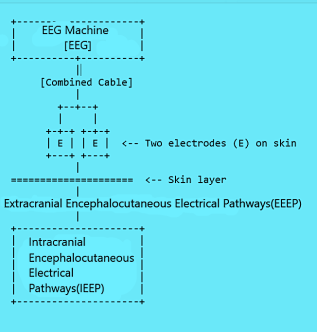
The Encephalocutaneous Electrical Pathways (EEP) constitute a novel, specialized anatomical and physiological framework that redefines the origin and transmission of EEG (Figure 1). Unlike the traditional view that attributes EEG to summated neuronal discharges propagated via volume conduction, EEP introduces a dual-component, non-neuronal electrical system aligned with but distinct from the vascular architecture of the brain and body.
3.1. Intracranial EEP Component
This component comprises microscopic intracranial electrical pathways that originate within the brain. These are non-neuronal bioelectrical structures, structurally distinct from neural tissue, and are hypothesized to conduct electrical activity independently of synaptic transmission or neuronal field potentials. They are thought to align closely with intracranial vascular channels, particularly within perivascular microenvironments, where their positioning may facilitate the organization and guidance of bioelectrical flow, without forming part of the vessels themselves.
3.2. Extracranial EEP Component
Extending from the intracranial domain, these specialized extracranial electrical pathways travel alongside vascular routes through the meninges, cranial emissary veins, connective tissues, and subdermal layers. They project to the skin surface as encephalocutaneous electrical pathways, terminating in cutaneous microstructures capable of radiating brain-derived bioelectrical activity outward. These dermal terminations constitute the functional interface through which EEG become detectable by scalp electrodes.
The EEP framework proposes that EEG waveforms recorded at the skin surface originate from non-neuronal electrical currents transmitted through anatomically discrete, microscopic encephalocutaneous electrical pathways. These pathways, like intracranial component, while following vascular channels, remain structurally and functionally distinct from the circulatory system itself. Importantly, the disappearance of EEG signals following cerebral circulatory arrest provides indirect evidence of the dependence of these specialized conduits on vascular integrity, indicating a close functional relationship between EEP structures and the brain’s blood supply.
This hypothesis presents a paradigm shift in understanding both the origin and the anatomical pathways through which brain-derived bioelectrical activity is transmitted and ultimately culminates in EEG signals at the body surface. It opens new frontiers for anatomical, physiological, and bioengineering research into encephalocutaneous bioelectricity.
Figure 1. Hypothetical framework for the Encephalocutaneous Electrical Pathways (EEP) linking the heart with the skin in Electroencephalogram (EEG) generation.
4. Discussion
The Encephalocutaneous Electrical Pathways (EEP) hypothesis introduces a transformative perspective in the field of neurophysiology by proposing a vascular-aligned, non-neuronal mechanism for electroencephalogram (EEG) signal propagation. The traditional view, rooted in volume conduction theory, posits that EEG signals are the summation of cortical postsynaptic potentials that diffuse passively through cerebrospinal fluid, dura mater, skull, and skin . While this paradigm has guided EEG interpretation for nearly a century, it fails to fully explain several critical physiological and clinical observations—most notably, the immediate loss of EEG signals following cerebral circulatory arrest . The EEP framework offers a novel and integrative model to bridge these gaps, incorporating recent advances in vascular electrophysiology, glial signaling, and perivascular conduction .
4.1. Intracranial EEP Component: Microvascular-Aligned Electrical Transmission
The intracranial component of EEP hypothesizes the existence of microstructural electrical conduits that align with perivascular spaces, including astrocytic endfeet and endothelial membranes. This anatomical arrangement is supported by emerging evidence showing that capillary endothelial cells and astrocytes are not merely passive components of the neurovascular unit but are electrically active . For example, Longden and Nelson (2021) demonstrated that endothelial cells can propagate hyperpolarization signals across cerebral capillaries via gap junctions, effectively transmitting electrical information independent of neuronal activity . Similarly, astrocytic calcium waves have been shown to coordinate blood flow and influence neurovascular coupling . These findings validate the plausibility of a microvascular-aligned electrical architecture capable of conducting signals from deeper brain structures toward the cortical surface.
Moreover, the recent concept of electrocalcium coupling in brain capillaries, as described by Mughal et al. (2024), offers mechanistic insight into how electrical signals may be amplified and directed within the neurovascular network . Such conduction may occur through perivascular glial pathways, forming a parallel yet complementary route to classical neuronal axonal transmission. The intracranial EEP framework thus introduces a previously unrecognized layer of complexity in understanding how the brain organizes and communicates its electrical output.
4.2. Extracranial EEP Component: Vascular-Tissue Electrical Continuity to the Skin
The extracranial component of EEP extends this vascular-aligned conduction pathway beyond the cranial cavity. It proposes that electrical signals originating within the brain may follow vascular corridors—particularly those traversing the dura mater, subcutaneous tissue, and connective fascial planes—towards the scalp. While these pathways are anatomically distinct from vasculature, they may utilize similar conduits for spatial orientation. This idea is not without precedent. Historical studies have noted the presence of low-resistance pathways along blood vessels and connective tissues, facilitating the preferential movement of electrical currents .
Furthermore, clinical EEG recordings demonstrate that signals can be detected at the scalp even when significant portions of cortical activity are subdued or anatomically distant. This supports the notion that additional, possibly vascular-guided, mechanisms contribute to signal emergence on the skin. The distinct anatomical properties of connective tissues and their embedded collagen fibrils—known to possess piezoelectric characteristics—may further support signal conduction from vascular-aligned intracranial origins to extracranial dermal terminations .
4.3. Revisiting Volume Conduction Theory
Volume conduction, while robust in accounting for certain EEG patterns, does not sufficiently address the rapidity and spatial coherence of EEG changes observed in acute clinical conditions, such as cardiogenic shock or global hypoxia . Nor does it explain how scalp-recorded signals persist in certain neurosurgical procedures where cortical surface exposure is minimal. The EEP model, by suggesting a continuous bioelectrical axis aligned with vascular and connective architectures, offers an elegant explanation that preserves and extends current understanding rather than discarding it entirely.
It is plausible that both models operate concurrently—volume conduction governing bulk field potentials, while EEP structures allow for directed, high-fidelity bioelectrical signaling. The identification and validation of EEP pathways may therefore resolve long-standing discrepancies between theoretical EEG models and clinical observations .
4.4. Historical Precedents and Conceptual Parallels
The notion of electrical continuity from the brain to the skin is not novel, though it has lacked formal anatomical and physiological substantiation. Richard Caton’s 1875 experiments demonstrated cortical currents in animal models , while Hans Berger’s pioneering human EEG studies in 1929 firmly linked mental activity to scalp-measurable rhythms . These early observations, although interpreted through a neurocentric lens, align with the core assertion of EEP: that the brain communicates with the body surface through measurable electrical outputs. The discovery of astrocytic and endothelial contributions to brain signaling affirms and extends these classical insights .
4.5. Anatomical and Biophysical Corroboration
Recent studies using advanced imaging techniques, such as two-photon microscopy and high-resolution electron microscopy, have revealed intricate neurovascular and perivascular networks capable of mediating electrical, chemical, and mechanical interactions . The anatomical plausibility of EEP is strengthened by these findings, which demonstrate that electrical signals in the brain are not exclusively confined to neurons. Collagen-rich perivascular spaces, abundant in both intracranial and extracranial regions, offer conductive channels potentially suitable for EEP-mediated signaling .
Biophysical modeling of brain tissues further supports the feasibility of such pathways. Studies have shown that anisotropic conductivity in brain and skull tissues can produce directional biases in electrical propagation [18, 31]. The alignment of vascular and connective tissue fibers could thus provide a path of least resistance for signal transmission, consistent with EEP architecture.
4.6. Clinical Implications and Future Directions
The EEP hypothesis has profound implications for both clinical practice and biomedical engineering. First, it opens a new avenue for interpreting EEG, particularly in cases of unexplained scalp electrical activity or paradoxical EEG patterns. Understanding EEP structures may also improve the diagnostic accuracy of EEG in cerebral perfusion monitoring, epilepsy localization, and neurodegenerative disease assessment .
Second, the validation of EEP pathways could revolutionize non-invasive brain-computer interface (BCI) technologies. By targeting specific extracranial electrical conduits, signal acquisition could become more efficient, precise, and resistant to noise. Similarly, EEG electrode designs might evolve to accommodate the spatial distribution of EEP termini rather than relying solely on the traditional 10-20 system .
Recent discoveries in brain tissue imaging, as well as studies highlighting the influence of glial and vascular structures on signal propagation, provide the empirical foundation for pursuing this paradigm .
Future studies should focus on mapping EEP structures using electrophysiological tracing, immunohistochemistry, and in vivo voltage-sensitive dye imaging. Genetic or pharmacologic disruption of candidate cellular components (e.g., endothelial gap junctions or astrocytic channels) may provide causal evidence for EEP functionality. Moreover, biophysical simulations incorporating vascular alignment and tissue conductivity could quantify the contribution of EEP to overall EEG signal strength .
5. Conclusion
The Encephalocutaneous Electrical Pathways (EEP) hypothesis introduces a paradigm shift in our understanding of EEG origin and propagation. By identifying a dual-component structure—an intracranial, microvascular-aligned electrical network and an extracranial microvascular-aligned electrical conduit system—the EEP model proposes an anatomically coherent and physiologically plausible mechanism for brain-to-skin bioelectricity.
EEP does not negate the established principles of volume conduction; rather, it enriches them by adding depth to the anatomical and functional substrate of EEG generation. The alignment of EEP with vascular and connective tissue architecture offers a compelling explanation for phenomena unexplained by traditional models. If validated through empirical research, EEP will not only redefine EEG physiology but also open transformative avenues for diagnostics, therapeutics, and electrophysiology interface technologies.
In the spirit of scientific exploration exemplified by Caton, Berger, and contemporary neurovascular pioneers, the EEP framework invites a renewed inquiry into the electrical conversation between the brain and the skin. The journey from encephalon to epidermis, once viewed through a limited lens, may now be illuminated by a vascular-electrical continuum that challenges, complements, and expands the boundaries of neurophysiology.
Abbreviations

BCI

Brain-Computer Interface

EEG

Electroencephalogram

EEP

Encephalocutaneous Electrical Pathways

EEEP

Extracranial Encephalocutaneous Electrical Pathways

IEEP

Intracranial Encephalocutaneous Electrical Pathways

Author Contributions
Oluwadare Ogunlade is the sole author. The author read and approved the final manuscript.
Funding
This work is not supported by any external funding.
Conflicts of Interest
The authors declare no conflicts of interest.
References
[1] Nunez PL, Srinivasan R. Electric fields of the brain: The neurophysics of EEG. 2nd ed. Oxford University Press; 2006.
[2] Iliff JJ, Wang M, Liao Y, et al. A paravascular pathway facilitates CSF flow through the brain parenchyma and the clearance of interstitial solutes. Sci Transl Med. 2012; 4(147): 147ra111.
[3] Nedergaard M, Goldman SA. Glymphatic failure as a final common pathway to dementia. Science. 2020; 370(6512): 50-56.
[4] Mughal A, Hennig GW, Heppner T, Tsoukias NM, Hill-Eubanks D, Nelson MT. Electrocalcium coupling in brain capillaries: Rapidly traveling electrical signals ignite local calcium signals. Proceedings of the National Academy of Sciences. 2024 Dec 17; 121(51): e2415047121.
[5] Hakim MA, Behringer EJ, Nelson MT. K_IR channel regulation of electrical conduction along cerebrovascular endothelium: enhanced modulation during Alzheimer's disease. Microcirculation. 2023; 30(1): e12797.
[6] Buzsáki G, Anastassiou CA, Koch C. The origin of extracellular fields and currents—EEG, ECoG, LFP and spikes. Nat Rev Neurosci. 2012; 13(6): 407-420.
[7] Chiang CC, Shivacharan RS, Durand DM. Slow periodic activity in hippocampal slice propagates via ephaptic coupling. J Physiol. 2018; 596(22): 5513-5529.
[8] Ihne J, Lindström M, Halén J. Astrocytic endfoot calcium waves regulate cerebral blood flow independent of neuronal activation. eLife. 2021; 10: e64311.
[9] Zhang Y, Shao Y, Wang Y, et al. From mechanisms to medicine: neurovascular coupling in cerebrovascular disorders. Cells. 2023; 14(1): 16.
[10] Wardlaw JM, Smith C, Dichgans M. Small vessel disease: mechanisms and clinical implications. Lancet Neurol. 2019; 18(7): 684-696.
[11] Finger S. Origins of Neuroscience: A History of Explorations into Brain Function. Oxford University Press; 1994.
[12] Gross CG. Brain, vision, memory: tales in the history of neuroscience. Trends Neurosci. 1999; 22(1): 27-30.
[13] Clarke E, O'Malley CD. The Human Brain and Spinal Cord: A Historical Study Illustrated by Writings from Antiquity to the Twentieth Century. University of California Press; 1996.
[14] Caton R. The electric currents of the brain. BrMedJ. 1875; 2(765): 278.
[15] Berger H. Über das Elektrenkephalogramm des Menschen. Arch Psychiatr Nervenkr. 1929; 87: 527-570.
[16] Gloor P. Hans Berger on the electroencephalogram of man. Electroencephalogr Clin Neurophysiol Suppl. 1969; 28: 1-350.
[17] Cobb W, Sears TA. A study of the transmission of potentials after hemispherectomy. Electroencephalogr Clin Neurophysiol. 1960; 12(2): 371-83.
[18] Lopes da Silva FH. EEG and MEG: relevance to neuroscience. Neuron. 2013; 80(5): 1112-1128.
[19] Libenson MH. Clinical EEG monitoring after cardiac arrest. Intensive Care Med. 2022; 48(3): 389-414.
[20] Longden TA, Nelson MT. Regulation of cerebral blood flow by endothelial electrical signaling. Glia. 2021; 69(5): 1048-1063.
[21] Guerra G, Lucariello A, Perna A, Botta L, DeLuca A, Moccia F. The Role of Endothelial Ca²⁺ Signaling in Neurovascular Coupling: A View from the Lumen. Int J Mol Sci. 2018; 19(4): 938.
[22] Bazargani N, Attwell D. Astrocyte calcium signaling: the third wave. Nat Neurosci. 2016; 19(2): 182-189.
[23] Frazier AE, Thompson RM, Halliday GM, Shepherd RK, Dottori M. Non-neuronal cells in the neurovascular unit: key roles in health and neurodegenerative disease. Front Neurosci. 2021; 15: 664313.
[24] BA, Newman EA. Astrocyte regulation of blood flow in the brain. Cold Spring Harb Perspect Biol. 2015; 7(5): a020388.
[25] Greger B, Halgren E, Schalk G. The neurophysiology of brain-computer interfaces: past, present, and future. IEEE Trans Biomed Eng. 2020; 67(11): 3093-3105.
[26] Fukada E, Yasuda I. On the piezoelectric effect of bone. J Phys Soc Jpn. 1957; 12(10): 1158-1162.
[27] Claassen J, Hirsch LJ, Kreiter KT, Du EY, Connolly ES, Mayer SA. Quantitative continuous EEG for detecting delayed cerebral ischemia in subarachnoid hemorrhage. Clin Neurophysiol. 2004; 115(12): 2699-2710.
[28] Shih AY, Driscoll JD, Drew PJ, Nishimura N, Schaffer CB, Kleinfeld D. Two-photon microscopy as a tool to study blood flow and neurovascular coupling in the rodent brain. J Cereb Blood Flow Metab. 2012; 32(7): 1277-309
[29] Wang XJ. Macroscopic gradients of synaptic excitation and inhibition in the neocortex. Nat Rev Neurosci. 2020; 21(3): 169-178.
[30] Araque A, Carmignoto G, Haydon PG, Oliet SHR, Robitaille R, Volterra A. Gliotransmitters travel in time and space. Neuron. 2014; 81(4): 728-739.
[31] Kisler K, Nelson AR, Montagne A, Zlokovic BV. Cerebral blood flow regulation and neurovascular dysfunction in Alzheimer disease. Nat Rev Neurosci. 2017; 18(7): 419-434.
[32] Thomsen K, Piilgaard H, Gjedde A, Bonvento G, Lauritzen M. Principal cell spiking, postsynaptic excitation, and oxygen consumption in the rat cerebellum. J Neurosci. 2009; 29(7): 2185-2195.
[33] Rash JE. Molecular disruptions of the panglial syncytium block potassium siphoning and axonal saltatory conduction: pertinence to neuromyelitis optica and other demyelinating diseases of the central nervous system. Neuroscience. 2010; 168(4): 982-1008.
[34] Hallez H, Vanrumste B, Van Hese P, D'Asseler Y, Lemahieu I, Van de Walle R. Dipole estimation errors due to differences in modeling anisotropic conductivities in realistic head models for EEG source analysis. Phys Med Biol. 2008; 53(7): 1877-1894.
[35] Johnson EL, Young ML, Moore SK, et al. Long-term electroencephalography monitoring in critically ill patients: practical considerations and clinical relevance. J Clin Neurophysiol. 2021; 38(1): 3-14.
[36] Liao LD, Wang IJ, Chen SF, Chang JY, Lin CT. Design, fabrication and experimental validation of a novel dry-contact sensor for measuring electroencephalography signals without skin preparation. Sensors (Basel). 2011; 11(6): 5819-5834.
Cite This Article
  • APA Style

    Ogunlade, O. (2025). Beyond Volume Conduction: The Encephalocutaneous Electrical Pathways (EEP) Hypothesis for Vascular-Aligned, Non-Neuronal EEG Genesis and Propagation. Science Innovation, 13(4), 57-62. https://doi.org/10.11648/j.si.20251304.11

    Copy | Download

    ACS Style

    Ogunlade, O. Beyond Volume Conduction: The Encephalocutaneous Electrical Pathways (EEP) Hypothesis for Vascular-Aligned, Non-Neuronal EEG Genesis and Propagation. Sci. Innov. 2025, 13(4), 57-62. doi: 10.11648/j.si.20251304.11

    Copy | Download

    AMA Style

    Ogunlade O. Beyond Volume Conduction: The Encephalocutaneous Electrical Pathways (EEP) Hypothesis for Vascular-Aligned, Non-Neuronal EEG Genesis and Propagation. Sci Innov. 2025;13(4):57-62. doi: 10.11648/j.si.20251304.11

    Copy | Download

  • @article{10.11648/j.si.20251304.11,
      author = {Oluwadare Ogunlade},
      title = {Beyond Volume Conduction: The Encephalocutaneous Electrical Pathways (EEP) Hypothesis for Vascular-Aligned, Non-Neuronal EEG Genesis and Propagation
    },
      journal = {Science Innovation},
      volume = {13},
      number = {4},
      pages = {57-62},
      doi = {10.11648/j.si.20251304.11},
      url = {https://doi.org/10.11648/j.si.20251304.11},
      eprint = {https://article.sciencepublishinggroup.com/pdf/10.11648.j.si.20251304.11},
      abstract = {The traditional understanding of electroencephalogram (EEG) genesis and propagation center on the summation of neuronal field potentials transmitted to the scalp via passive volume conduction. While this neurocentric view has dominated EEG interpretation for decades, certain bioelectrical observations—such as the abrupt disappearance of EEG activity following cerebral circulatory arrest—suggest that a more nuanced mechanism may underlie the transmission of brain-derived electrical signals to the body surface. This paper introduces a novel vascular-electrical hypothesis termed Encephalocutaneous Electrical Pathways (EEP), which proposes that specialized, non-neuronal electrical conduits—distinct from classical axonal pathways—exist within both intracranial and extracranial compartments and serve to transmit bioelectrical activity from the brain to the skin surface. EEP comprises two structurally integrated components: an intracranial network of microscopic electrical pathways, hypothesized to propagate bioelectricity independently of synaptic transmission and aligned with perivascular microenvironments, and an extracranial extension of these pathways that follows vascular channels through the meninges and connective tissues to terminate in the skin. These encephalocutaneous terminations constitute the interface through which EEG signals emerge on the scalp. Although closely associated with vascular architecture, EEP structures are not vascular themselves, but anatomically distinct entities that utilize the vascular corridors for spatial orientation. This hypothesis accounts for EEG disappearance following loss of cerebral perfusion and posits a direct, vascular-aligned but non-vascular electrical continuum from brain to skin. If validated, the EEP model would challenge conventional views of EEG signal origin and propagation and establish a foundation for exploring extracranial bioelectric communication. It opens new directions for anatomical mapping, electrophysiological validation, and the development of novel EEG technologies that account for encephalocutaneous bioelectricity.},
     year = {2025}
    }
    

    Copy | Download

  • TY  - JOUR
    T1  - Beyond Volume Conduction: The Encephalocutaneous Electrical Pathways (EEP) Hypothesis for Vascular-Aligned, Non-Neuronal EEG Genesis and Propagation
    
    AU  - Oluwadare Ogunlade
    Y1  - 2025/07/23
    PY  - 2025
    N1  - https://doi.org/10.11648/j.si.20251304.11
    DO  - 10.11648/j.si.20251304.11
    T2  - Science Innovation
    JF  - Science Innovation
    JO  - Science Innovation
    SP  - 57
    EP  - 62
    PB  - Science Publishing Group
    SN  - 2328-787X
    UR  - https://doi.org/10.11648/j.si.20251304.11
    AB  - The traditional understanding of electroencephalogram (EEG) genesis and propagation center on the summation of neuronal field potentials transmitted to the scalp via passive volume conduction. While this neurocentric view has dominated EEG interpretation for decades, certain bioelectrical observations—such as the abrupt disappearance of EEG activity following cerebral circulatory arrest—suggest that a more nuanced mechanism may underlie the transmission of brain-derived electrical signals to the body surface. This paper introduces a novel vascular-electrical hypothesis termed Encephalocutaneous Electrical Pathways (EEP), which proposes that specialized, non-neuronal electrical conduits—distinct from classical axonal pathways—exist within both intracranial and extracranial compartments and serve to transmit bioelectrical activity from the brain to the skin surface. EEP comprises two structurally integrated components: an intracranial network of microscopic electrical pathways, hypothesized to propagate bioelectricity independently of synaptic transmission and aligned with perivascular microenvironments, and an extracranial extension of these pathways that follows vascular channels through the meninges and connective tissues to terminate in the skin. These encephalocutaneous terminations constitute the interface through which EEG signals emerge on the scalp. Although closely associated with vascular architecture, EEP structures are not vascular themselves, but anatomically distinct entities that utilize the vascular corridors for spatial orientation. This hypothesis accounts for EEG disappearance following loss of cerebral perfusion and posits a direct, vascular-aligned but non-vascular electrical continuum from brain to skin. If validated, the EEP model would challenge conventional views of EEG signal origin and propagation and establish a foundation for exploring extracranial bioelectric communication. It opens new directions for anatomical mapping, electrophysiological validation, and the development of novel EEG technologies that account for encephalocutaneous bioelectricity.
    VL  - 13
    IS  - 4
    ER  - 

    Copy | Download

Author Information